How to Organize Bags and Purses in a Closet
Sort your bags by how often you use them and by whether they hold their shape, then give each kind a home: upright on a shelf, on a hook, filed in a box or covered on the upper shelf.
Bags are hard to store because no two are the same shape. Some stand up, some collapse, some have long straps that tangle with everything nearby, and a pile on the shelf or the closet floor hides all but the top one.
To organize bags and purses so each one can be found and put back, sort them twice: once by how often you use them and once by whether they hold their own shape. Those two answers decide where each bag goes.
Sort by use, then by structure
Take every bag out of the closet and empty each one. Old receipts, loose coins and forgotten items add bulk and make a bag harder to store.
Then make three groups by use:
- Daily: the one or two bags you carry most days.
- Regular: bags used a few times a month, such as a gym bag, a tote or a backpack.
- Occasional: bags that come out a few times a year, including travel bags and small evening bags.
Within each group, separate structured bags, which keep their shape when empty, from soft ones, which fold or slump. If a bag has not been used in a long while and you cannot say when it would be, this is the moment to put it in the donate box. Count what is left; that number is what your closet has to hold.
Stand structured bags on a shelf
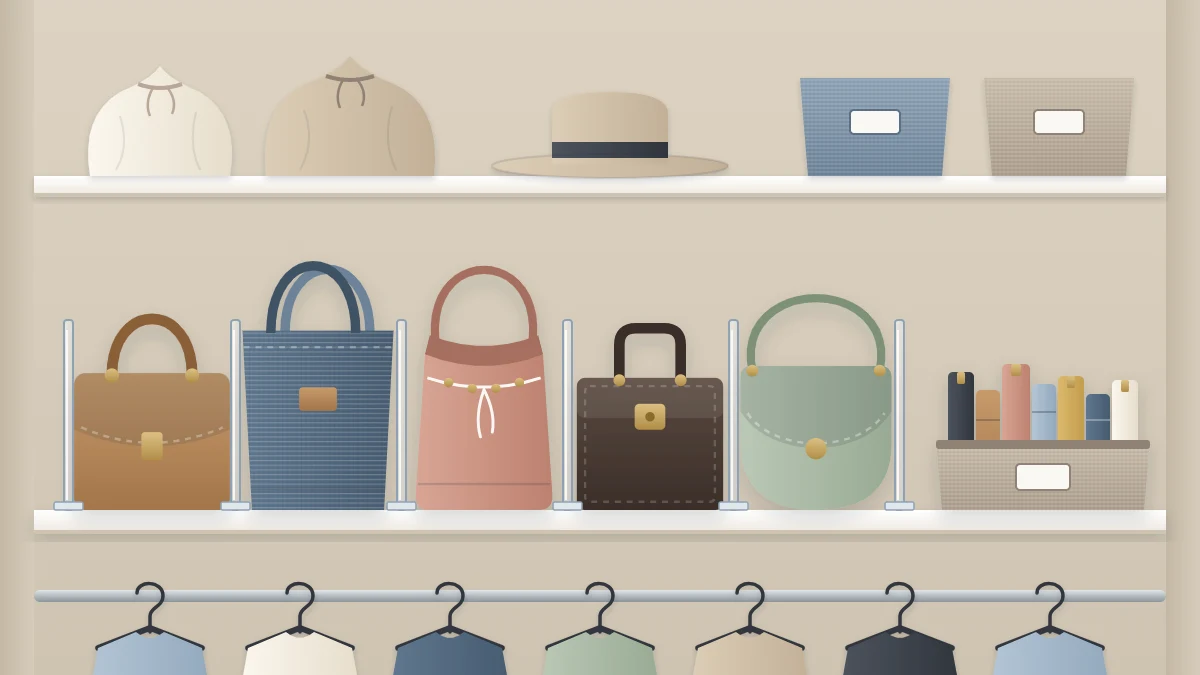
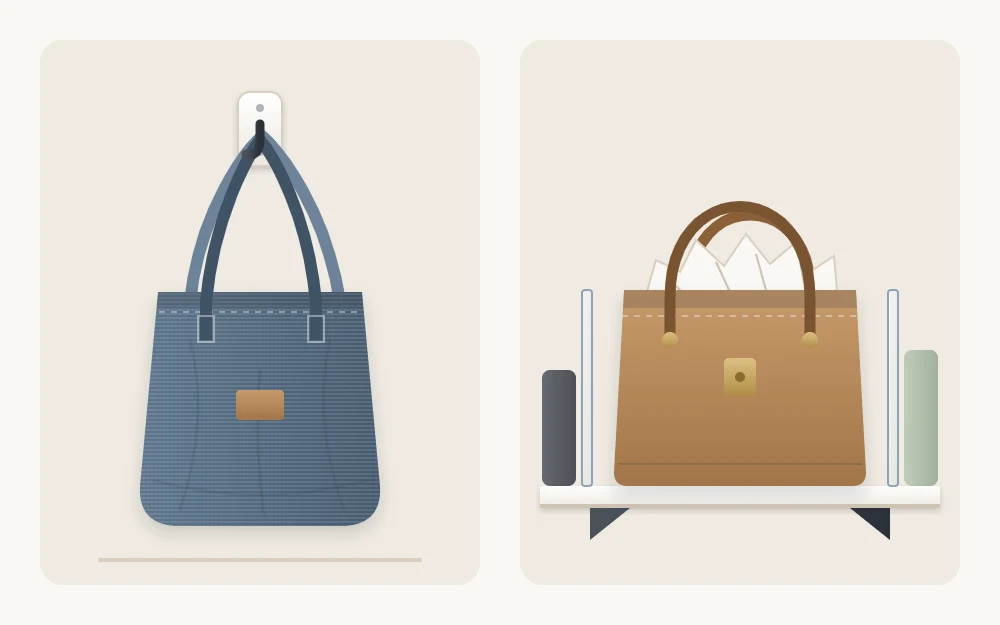
Structured bags keep their shape best standing upright on a shelf, side by side like books. Each one is visible, and you can take one out without moving the others.
A row of bags tends to lean and slide, so give it something to rest against. Shelf dividers that slip over or clamp onto the shelf create upright slots; fit them as the product’s instructions describe. Open bins do the same job and can be pulled forward like a drawer. The guide to closet storage bins explains how to match a bin to a shelf.
Measure before you arrange: the height of your tallest bag against the space above the shelf, and the depth of the shelf against the widest bag. A bag that hangs over the front edge will be knocked off sooner or later.
Help them keep their shape
Fill each structured bag lightly so its sides do not fold in. Plain paper crumpled loosely works, as does a small pillow insert. Use just enough to support the sides; a bag stuffed tight is being stretched, not supported.
Hang or fold soft bags
Soft bags, totes and backpacks do not need a shelf. They have two good homes.
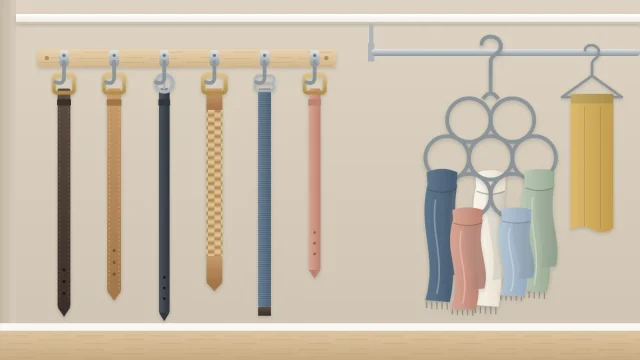
- On hooks. A hook on the closet side wall or the inside of the door holds a tote or backpack by its straps or top loop, in plain sight. One bag per hook is easiest to live with.
- Folded in a bin. Canvas totes and foldable shopping bags fold flat and file on edge in an open bin, where a dozen take little room.
Good to know
Hanging a bag by its straps for long periods may stretch or stress the straps, particularly on a heavier bag. For those, a shelf is the gentler choice. Whatever hooks or rails you use, fit and load them according to the product manufacturer’s instructions, which state what each one is designed to carry.
File small bags upright
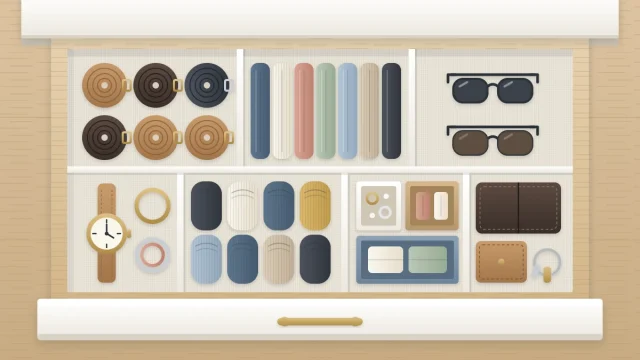
Clutches, pouches, wallets and small cosmetic bags vanish under larger bags. Give them a container of their own: a shallow box on a shelf, or a drawer, with the items standing on edge in a row so each one shows.
A box about as tall as the clutches themselves keeps them from tipping. If they slide around, a divider or a smaller box inside the first will hold the row together. Small bags sit naturally with other small items, and the guide on how to organize accessories covers trays and shallow containers for those.
Deal with the straps
Straps cause most of the tangling. Before a bag goes on the shelf, tuck its strap inside, or lay it flat along the top or side of the bag. Avoid folding a strap sharply in the same place every time, since a repeated fold can set into a crease.
Detachable straps can come off and go inside the bag they belong to, so the two are never separated. Chain straps are best tucked inside, wrapped in a piece of soft cloth or paper so the metal does not press against the outside of the bag.
Give your daily bag a landing spot
The bag you carry every day should not share a row with the rest. Give it one fixed spot at a height you can reach without stretching: a hook, an empty section of shelf or a place near the door of your home. The test is whether you can put it down there with one hand when you come in.
Empty it regularly, too. A daily bag collects papers and small items quickly, and clearing it out every week or so keeps it lighter and easier to put away.
Tip
When you switch daily bags, put the one you have just stopped using back in its slot right away. A bag left out “for now” is how the pile on the floor starts again.
Store rarely used bags up high
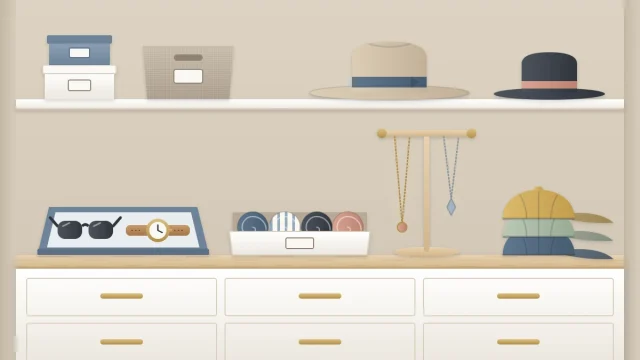
Occasional bags can go on the upper shelf, where they stay out of the way. Protect them from dust with the dust bag they came with or a breathable fabric bag, rather than sealed plastic. Fill them lightly first, as you would on a lower shelf.
A covered bag is a hidden bag, so keep the row in a fixed order or add a simple tag to each cover. Nest travel bags inside one another if they fit, to save space. For reaching the shelf, use a stable step stool as its instructions describe. The guide to organizing the closet top shelf explains how to arrange and reach what lives there.
Once everything has a place, look at the arrangement again after a few weeks. If a bag keeps ending up on the floor, its home is probably too high, too tight or too far from where you set it down, and moving it is the fix.
Frequently asked questions
Is it bad to hang purses by their straps?
For light, soft bags it is usually fine and keeps them visible. Over long periods, hanging may stretch or stress the straps of a heavier bag, so a shelf is the gentler choice for those. Fit and load any hook according to the product manufacturer's instructions.
What should I fill a bag with so it keeps its shape?
Loosely crumpled plain paper or a small pillow insert both work. Use just enough to stop the sides from folding in. A bag that is packed tight is being stretched, so stop as soon as it stands on its own and its sides look relaxed.
How do I store bags when I have no shelf space?
Use the surfaces that are free. Soft bags can hang on hooks on a side wall or inside the door, foldable totes can file in one bin on the floor, and small bags can stand in a drawer. Count your bags first, since fewer bags is often the simplest answer.