How to Organize Accessories in a Closet
Small accessories need containment and visibility. Sort them into kinds, give each kind one shallow container, and place it by how often you reach for it. Covers hats, gloves, ties, jewelry and glasses.
Hats on the shelf, gloves in a coat pocket, a tie over the rod, earrings in a dish somewhere: small things scatter because nothing in a closet is built for them. Rods hold hangers and shelves hold stacks, and everything else is left to find its own corner.
To organize accessories in a closet, give small things the two conditions they need: containment, so they stay together, and visibility, so you can see them without digging. Without both, they vanish.
Sort into kinds first
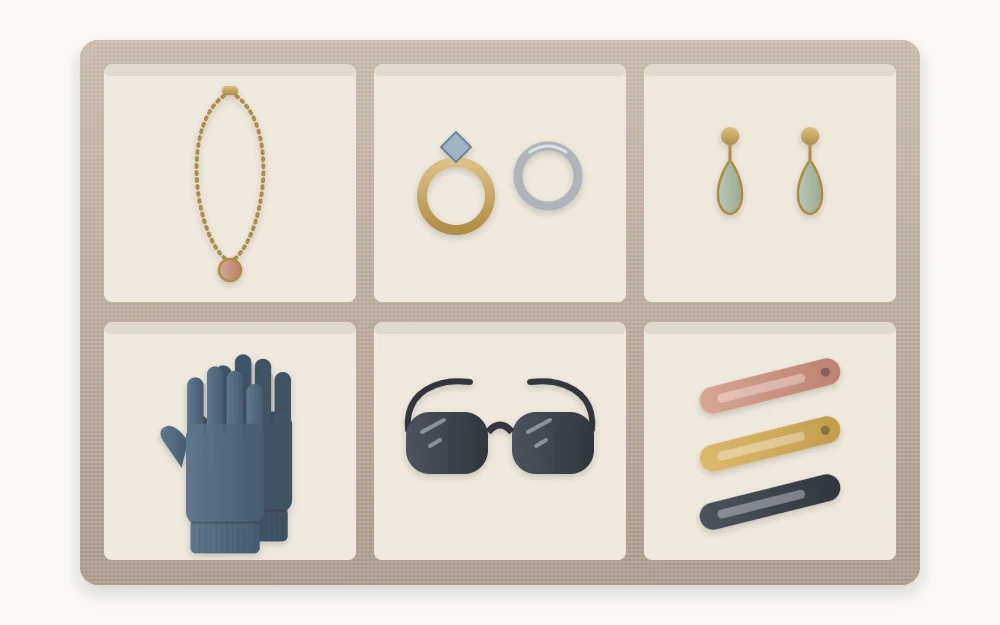
Collect every accessory from the closet, the dresser top, bags and coat pockets, and put them on a bed or table. Group them by kind, not by color or by how much you like them: hats, gloves and winter items, ties, jewelry, sunglasses and glasses, hair accessories, and whatever else you own.
Remove what is broken, single gloves with no partner, and anything you no longer use. Then count each group. A kind with three items needs a small tray; a kind with thirty needs a drawer. The rule after that is simple: each kind gets one shallow container, and nothing else goes in it.
Why shallow beats deep
A deep bin turns small items into layers, and the bottom layer is forgotten. A shallow tray, box or drawer holds one layer, so everything in it is visible at once and comes out without moving anything else.
Look for shallow space before you add anything: a top drawer, a shelf with a short gap above it, or the inside of the closet door. If you use a pocket organizer or hooks on the door, fit and load them according to the product manufacturer’s instructions. Deep bins still have a use for bulky kinds such as winter hats, where a single layer is not realistic.
Kind by kind
Hats
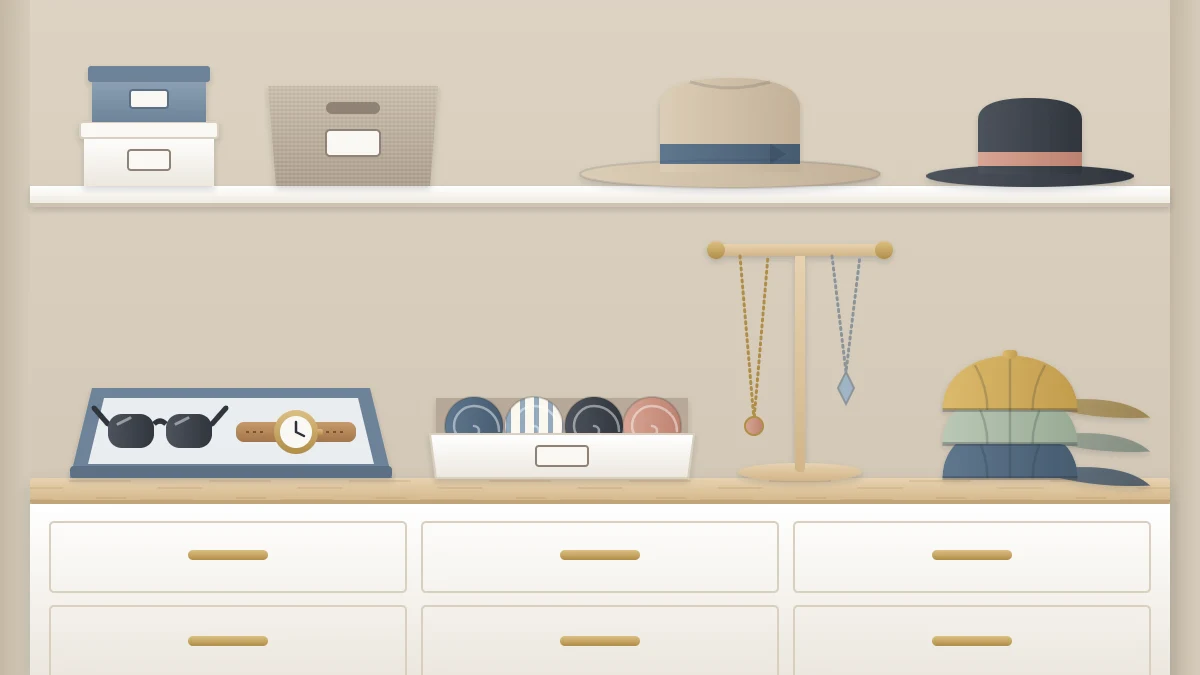
Caps nest: stack them one inside the next, or stand them in a row on their edges in a bin. Brimmed hats need more care because the brim bends under pressure. Rest one upside down on its crown, or set it on a shelf with clear space all around the brim and nothing on top. A hat can hang on a hook if its shape allows, but a hook can dent a soft crown over time, so check after a week or two.
Gloves and winter items
Keep pairs together, one glove tucked inside the other or the two folded as a unit. Put gloves, knit hats and ear warmers in one labeled bin, since they are used together and for only part of the year. Make sure everything is clean and completely dry before it goes in.
Ties
Roll each tie loosely from the narrow end and stand the rolls in a divided drawer or a small open box. Or hang them over a tie hanger, which holds several side by side on the rod. Rolling uses drawer space; hanging uses rod space and keeps every tie in view.
Everyday jewelry
A shallow tray with compartments keeps rings, earrings and watches apart. Necklaces are the difficult ones, because chains knot when they touch. Hang each from its own small hook or stand, or lay each one straight in a long compartment by itself.
Sunglasses and glasses
Lenses scratch when they rub against each other or against anything hard. Line them up in a tray with a soft liner, lenses facing up, or keep each pair in its case and stand the cases in a row.
Hair accessories and other small items
Clips, ties, pins and similar bits belong in small lidded boxes, one kind per box. The lids let the boxes stack, and a label on the front says what is inside.
A quick reference
| Kind | Container | Where |
|---|---|---|
| Caps | Nested stack or open bin | Shelf at or above eye level |
| Brimmed hats | None; resting on the crown | Shelf with clear space around the brim |
| Gloves and winter items | Labeled bin | Upper shelf off-season, lower in winter |
| Ties | Divided drawer or tie hanger | Drawer or rod near shirts |
| Everyday jewelry | Shallow tray with compartments | Top drawer or shelf at hand height |
| Sunglasses and glasses | Lined tray or row of cases | Hand height, near the door |
| Hair accessories | Small lidded boxes | Shallow drawer or shelf |
Treat the “where” column as a starting point. Your shelf heights, your reach and the number of items in each kind may point somewhere else.
Place by how often you reach
Height is the second decision. Items you use daily, such as a watch, everyday earrings or glasses, belong at hand height: roughly between your waist and your eyes, where you can see into the container. Items for occasional use go higher, and off-season items highest of all.
Use a stable step stool, as its instructions describe, for anything above easy reach. If you find yourself stretching for something every morning, it is stored too high for how often you use it.
Tip
Keep one small empty tray at hand height as a landing spot for whatever you take off at the end of the day. Empty it into the proper containers once a week.
Belts, scarves and bags
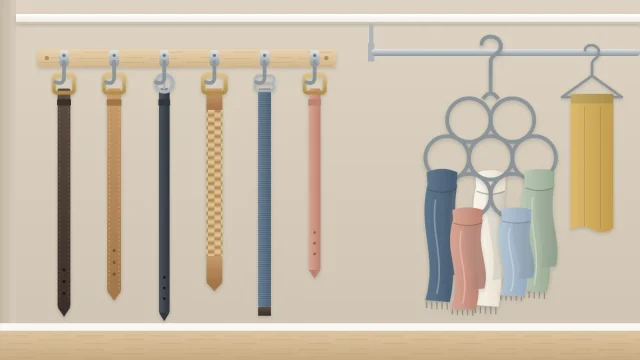
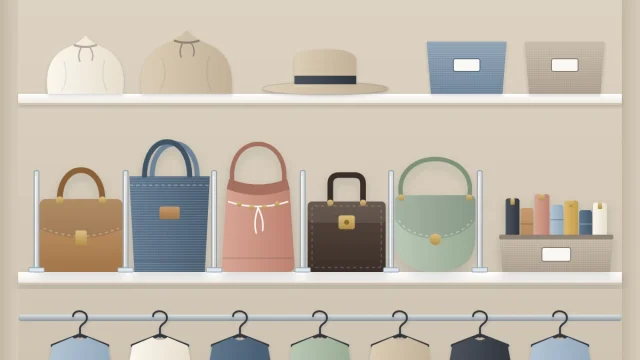
Three kinds of accessory are large enough to need their own approach. Long, loose items tangle and are best hung or rolled; the guide on how to organize belts and scarves compares the methods. Bags need shelf space and support to keep their shape, which the guide on how to organize bags and purses covers.
When one drawer holds everything
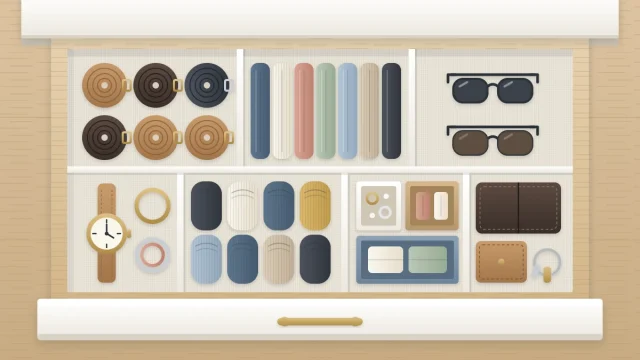
If your accessories fit in a single drawer, that is the neatest answer of all, provided the drawer is divided. An undivided drawer mixes its contents every time it opens and closes. The step-by-step guide to setting up an accessory drawer with dividers shows how to measure, plan compartments and fit them.
Whatever containers you choose, check them again after a few weeks. A tray that overflows needs a larger container or fewer items, and a kind that keeps escaping its box is probably stored too far from where you use it.
Frequently asked questions
How do I keep necklaces from tangling?
Keep chains from touching each other. Hang each necklace from its own small hook or stand so it falls straight, or lay each one flat in a long compartment by itself. Fastening the clasp before storing also helps, since an open chain slips into knots more easily.
What is the best way to store hats in a closet?
It depends on the hat. Caps can be nested in a stack or stood in a row in a bin. Brimmed hats do better resting on their crown or on a shelf with clear space around the brim and nothing on top, since pressure bends the brim.
Where should accessories go if my closet has no drawers?
Use shallow trays and small boxes on a shelf at hand height, and consider the inside of the door for pockets or hooks, fitted and loaded according to the product manufacturer's instructions. Lidded boxes stack, which lets one shelf hold several kinds without mixing them.