Closet Storage Bins: Choosing the Right Bins and Baskets
Bins are the last step of organizing a closet, not the first. Learn how to measure the shelf, pick a size, and choose between open and lidded, clear and opaque, and five common materials.
Buying closet storage bins feels like the start of getting organized, which is why so many closets hold a stack of containers that never quite fit. Bins are the last step, not the first. They work when you already know what is going into them and where they will sit.
So sort first, measure second and shop third. This guide covers the choices that decide whether a bin gets used: size, lid, visibility, material and grip.
Sort and count before you shop
A bin holds a category, so you need the categories before the containers. Finish decluttering, group what is left, and look at each group. How many scarves are there? How much space do the swimsuits take when folded? Those counts tell you how many bins you need and how big each should be.
Resist the large matching set until you know the numbers. A set of twelve bought in advance tends to produce twelve half-filled bins, or eight useful ones and four that become homes for clutter. Buy for one shelf, live with it for a week or two, then buy the rest.
Measure the shelf, then choose the size
Three measurements decide which bin fits: the width of the shelf, its depth from the front edge to the back wall, and the clear height between the shelf and whatever is above it. Write them down and take the note with you. The guide on how to measure a closet explains how to record a whole closet the same way.
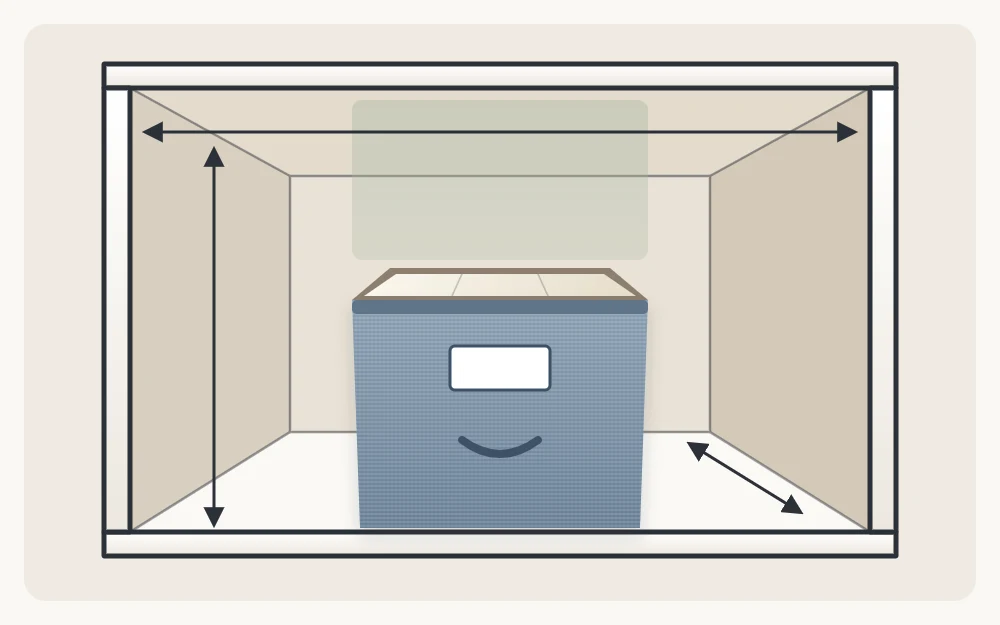
Then apply three rules to those numbers:
- Fill the depth. A bin that reaches close to the back wall uses the whole shelf. A shallow bin on a deep shelf leaves a strip behind it where things collect.
- Leave finger room above. You need a gap between the top of the bin and the shelf above so your hand can get in and the bin can tilt as it slides out.
- Divide the width evenly. Work out how many bins of one width fit side by side with a little slack, rather than mixing sizes.
Compare the outside dimensions of the bin with your shelf. Product listings sometimes give the inside size, and handles or rims can add to the width.
One family of bins per shelf
Bins of the same size and shape line up, slide past each other and leave no odd gaps. Mixed containers waste space at every join and make the shelf look busier than it is. You do not need one style for the whole closet, but each shelf should hold one family.
Keep to one category per bin as well. A bin of “winter accessories” works. A bin of gloves, spare buttons, a belt and a phone charger is a junk drawer with handles.
Open or lidded, clear or opaque
These two choices depend on how often you reach for the contents.
Open bins suit things you use often, because there is no lid to lift and you can drop items back in one motion. Lidded bins suit long storage: they keep dust out and stack if the design allows it. A lid on a bin you open daily soon ends up left off.
Clear bins show their contents, which helps on a shelf you rarely visit. Opaque bins hide the jumble and make a shelf look calmer, but nobody can tell what is inside without a label. If you choose opaque, plan to label each bin on its front face the day you fill it.
Bin materials compared
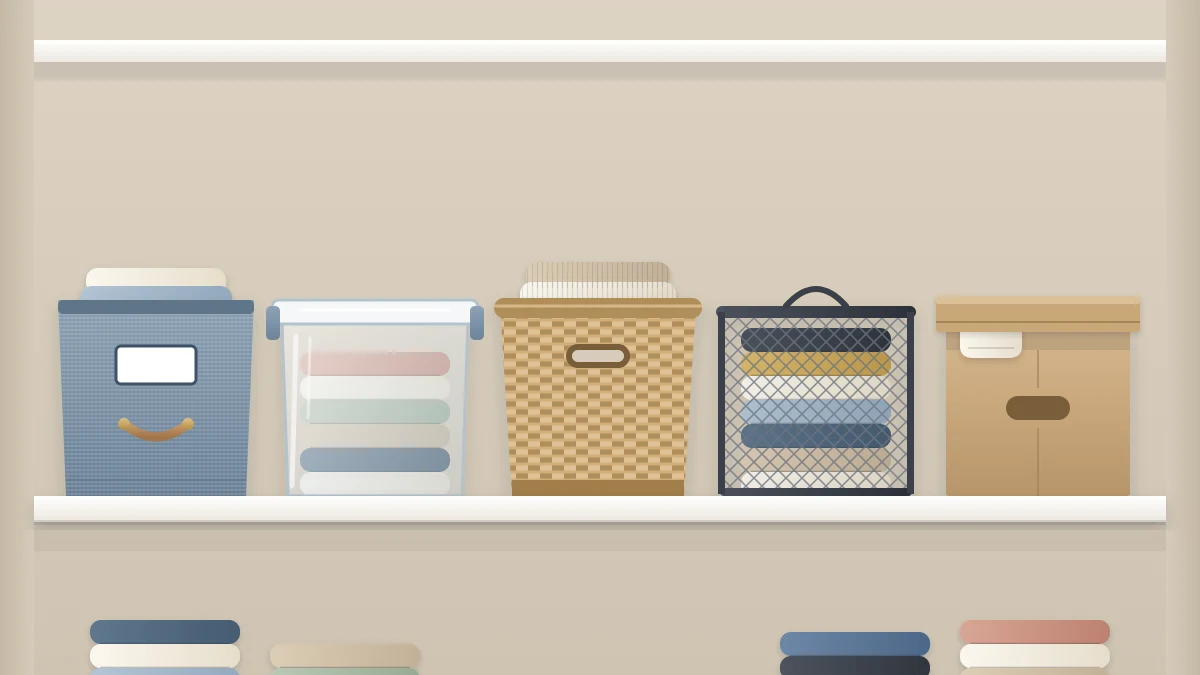
No material is best everywhere. Match it to where the bin sits and what it holds.
| Material | Weight and structure | Cleaning | Typical use |
|---|---|---|---|
| Fabric | Light; soft sides that may slump unless stiffened | Wipe or vacuum; check the care tag | Soft items on shelves, especially high ones |
| Plastic | Light to medium; rigid, often lidded | Wipes clean easily | Long storage, off-season clothes |
| Woven natural fiber | Medium; firm but can snag fine knits | Dust with a brush; keep dry | Open shelves at eye level |
| Wire or metal mesh | Heavier; rigid, contents visible | Wipe; small items may slip through | Shoes, bags, bulky items lower down |
| Cardboard | Light; rigid until damp or overfilled | Dust only; replace when worn | Trial runs, light items in dry closets |
Handles and grip for high shelves
A bin at chest height can be picked up any way you like. A bin above your head has to be drawn toward you by its front, so it needs a handle or cut-out grip on the front face, and it has to be light enough when full to lift down comfortably. Pack it, lift it to shoulder height, and split the contents if that feels like work.
How much the shelf itself can carry is a separate question, set by the shelf’s manufacturer and its fixings; check the product specifications rather than guessing. The guide to organizing the top shelf covers what belongs up there and how to reach it with a step stool.
What bins do well and badly
Bins are good for:
- Soft items that will not stay in a stack, such as scarves, hats and swimwear
- Small loose categories that would otherwise scatter along a shelf
- Off-season storage that stays shut for months
They are bad for one thing: hiding unsorted clutter. A bin makes a mess portable and invisible, which feels like progress and is not. If you cannot name what a bin holds in two or three words, it needs sorting, not a lid.
Tip
Try the layout with containers you already have. Shoe boxes and shipping boxes, covered in paper or left plain, show you within a week which sizes and positions work before you spend anything.
Frequently asked questions
What size bins should I buy for closet shelves?
Measure the shelf's width, depth and the clear height above it. Choose a bin that reaches close to the back wall, leaves room for your fingers above it, and divides the width evenly so several of the same size sit side by side. Compare the bin's outside dimensions, not the inside ones.
Are clear or opaque bins better for a closet?
Clear bins show what is inside, which helps on shelves you visit rarely. Opaque bins make a shelf look calmer but hide their contents, so each one needs a label on the front. Many closets use both: clear for long storage up high, opaque at eye level.
Should closet bins have lids?
It depends on how often you open them. Lids keep dust off items stored for months and let some bins stack. For things you reach for often, an open bin is easier because you can drop items back in one motion, and a lid would soon be left off.