Seasonal Clothing Storage: How to Store Off-Season Clothes
Store off-season clothes so they come back out in good condition: clean and dry them, fold knits and hang structured coats, pick a suitable container and keep it somewhere cool, dry and dark.

Clothes you will not wear for several months do not need to share the rod with the ones you wear this week. Good seasonal clothing storage does two jobs at once: it frees space in the closet, and it brings each garment back out in the condition it went in.
The second job is the one that gets skipped. A sweater pushed into a bag in a hurry in spring is a creased, stale sweater in fall. A little preparation, a suitable container and a sensible location make the difference.
Clean and dry everything first
Store only clean clothes. Soil, food traces and body oils left on fabric can set over the months and become harder to remove, and they can attract fabric pests. Something worn once and returned to the hanger may look clean without being clean.
Follow each garment’s care label for how to clean it. Then make sure every item is completely dry before it goes into a container, including thick seams, waistbands and padded areas, which hold moisture longest. Damp fabric shut in a closed box is the usual cause of musty smells and mold.
Empty the pockets, fasten zippers and buttons, and set aside anything that needs a repair so it is ready to wear when it returns.
Fold or hang: what months of storage do to a garment
A garment that hangs for half a year carries its own weight from the shoulders the whole time. Knits and heavy items stretch under that load, so fold them:
- Sweaters, cardigans and other knitwear
- Heavy sweatshirts and fleece
- T-shirts, shorts, swimwear and other soft, unstructured pieces
Fold loosely, put the heaviest items at the bottom of the container, and do not press the lid down on an overfilled box.
Structured coats, blazers and tailored pieces are the exception. They keep their shape best hanging on shaped hangers wide enough to support the shoulders, inside breathable garment bags that keep dust off while letting air through.
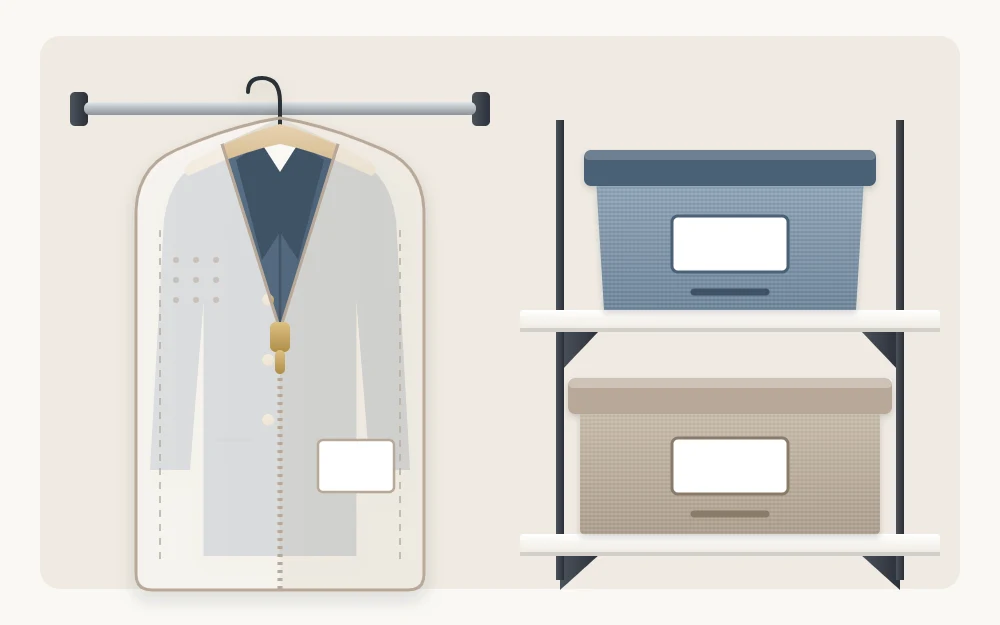
Storage containers compared
Three kinds of container cover most needs. Which one suits you depends on the garments and on where the container will sit.
| Container | What it does well | Watch for |
|---|---|---|
| Lidded plastic bin | Protects from dust and from damp surroundings; stacks neatly | Seals in whatever goes in, so pack only clean, fully dry items |
| Breathable fabric bag or box | Allows air movement; light and easy to lift | Less protection in a damp or dusty place |
| Vacuum compression bag | Saves a lot of space for bulky soft items | May crease garments; not suited to everything |
Vacuum compression bags deserve a caution. Squeezing the air out can leave deep creases and can flatten things that rely on loft or structure, such as down-filled jackets and tailored pieces. Check the garment maker’s guidance before compressing anything you care about, and keep these bags for items like spare bedding and casual knits if you are unsure.
For sizes, lids and materials in more detail, see the guide to choosing closet storage bins.
Where to keep stored clothes
Look for a place that is cool, dry and dark, and inside the lived-in part of the home. Conditions there stay steadier than in the spaces at its edges. Good options include:
- The upper shelf of the closet itself; the guide to organizing the top shelf explains how to pack it
- Under the bed, in flat lidded containers
- A closet in a spare room or hallway
Avoid damp basements, hot attics and spots in direct sun where you can. Moisture encourages mold, heat is hard on some fibers and trims, and strong light fades color along any exposed fold. If the only space you have is less than ideal, a well-sealed lidded bin offers more protection than a fabric bag, and it is worth checking on the contents once or twice during the season.
Good to know
If stored containers go on a high shelf, keep each one light enough to lift down comfortably and use a stable step stool as its instructions describe. What a shelf can carry is set by its manufacturer, so check the product specifications rather than guessing.
A note on clothes moths
The larvae of clothes moths feed on wool and other animal fibers, such as cashmere, silk, fur and feathers, and they favor items that are soiled and left undisturbed. That is why the usual prevention is the routine already described: clean everything before storing it, and use well-sealed containers.
If you find irregular holes in woolens, or see small moths or larvae in the closet, identify the problem before you act. For identification and management, see the University of California Statewide IPM Program’s page on clothes moths.
Label every container
A stored bin gets opened months after it was packed, usually by someone who has forgotten what went in it. Label each container with its contents and its season, for example “sweaters, winter” or “swimwear and shorts, summer”. Put the label on the face you will see when the container is in its storage place.
If you have more than three or four containers, a short list of what each one holds, kept on your phone or taped inside the closet door, saves opening them all to find a single item.
Bringing clothes back out
When the season turns, unpack before you need the clothes. Shake each item out, hang or refold it, and give creases a day or two to drop. Anything that smells stale can be aired or cleaned according to its care label.
The full twice-yearly swap, with its order of steps, is laid out in the guide to the seasonal closet switch.
Frequently asked questions
Should off-season clothes be stored in plastic bins or fabric bags?
Both work. Lidded plastic bins protect against dust and damp surroundings, but they seal in whatever you pack, so the clothes must be clean and fully dry. Breathable fabric bags allow air movement and suit a dry, clean spot indoors. Choose by where the container will sit.
Are vacuum compression bags safe for all clothes?
No. They save space for bulky soft items, but compression may crease garments and can flatten pieces that rely on loft or structure, such as down-filled jackets and tailored coats. Check the garment maker's guidance first, and keep the bags for items like spare bedding if you are unsure.
Do clothes need to be washed before seasonal storage?
Yes. Clean every item as its care label directs, even things worn only once, because soil and body oils can set in the fabric over several months. Then let everything dry completely before packing, since damp fabric in a closed container can turn musty.