How to Organize the Top Shelf of a Closet
The upper closet shelf works when it holds only what you reach rarely and every item sits in a container. Here is what belongs up there, how to choose bins you can lift down, and how to reach them safely.

The top shelf of a closet is usually the hardest part to keep in order. It sits above eye level, you reach it at arm’s length, and anything loose up there slides forward the moment you pull on the thing beside it.
The fix is simple to describe: treat the shelf as storage for things you reach rarely, and make sure every item on it sits inside a container or behind a divider. The rest of this guide covers what to put there, what to keep off it, and how to get things down without a struggle.
Decide what the upper shelf is for
Height costs effort. Each time you need something from the upper shelf you have to stretch or fetch a step stool, so the shelf suits items you want a few times a year rather than a few times a week. Good candidates include:
- Off-season clothes, packed as described in the guide to storing off-season clothes
- Spare bedding, blankets and pillows
- Clothes and shoes for rare occasions
- Luggage, travel bags and the bags you carry least often
- A small box of keepsakes
Bags deserve a second look before they go up. The ones you carry every week belong lower down, and the guide to organizing bags and purses explains how to keep the rest in shape while they wait.
What to keep off the top shelf
Three kinds of things do badly up high. The first is anything you use weekly: it will be pulled down in a hurry and pushed back anywhere. The second is anything heavy. Lifting a weighty box down from above your head is awkward, and a lower shelf or the floor is a better home for it. The third is anything fragile that would not survive a slip.
A useful rule of thumb is lighter items up high and heavier items lower in the closet.
Good to know
How much a shelf can carry is set by its manufacturer and by the way it is fixed to the wall, and you cannot judge either by looking. If you know what product the shelf is, check the manufacturer’s specifications. If you do not, keep the load light and ask a qualified installer when unsure.
Contain everything in bins of one size
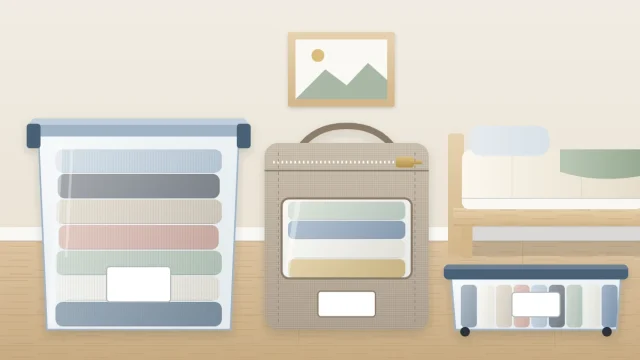
Loose stacks are the reason things fall. A folded pile of sweaters at arm’s length has nothing holding its sides, so the pile leans, and taking one item drags two more with it. A bin turns that pile into a single object you can lift down, set on the bed and search at a comfortable height.
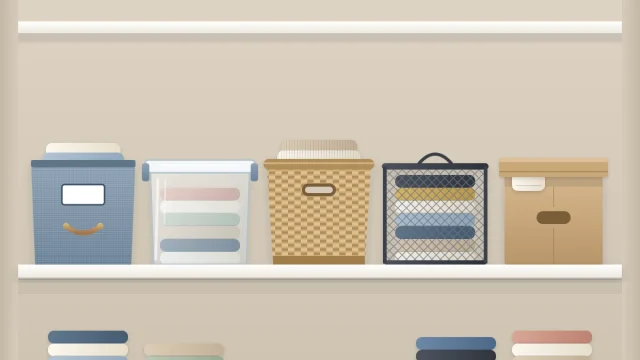
Before buying anything, measure the shelf: its width, its depth from the front edge to the back wall, and the clear height up to the ceiling or to the next shelf. Then choose one size of bin and repeat it along the shelf. Matching bins sit side by side in a row without the odd gaps that mixed containers leave.
For a shelf above your head, three features matter more than looks:
- A handle or grip on the front. You should be able to hook your fingers into it and draw the bin toward you without reaching over the top.
- A comfortable weight when full. Pack the bin, then lift it to shoulder height. If that feels like work, split the contents into two bins or move them lower.
- A lid for long storage. Lidded boxes keep dust off things that stay put for months. Open bins are fine for items you fetch more often.
Materials, lids and sizes are compared in detail in the guide to choosing closet storage bins.
Label the front of every container
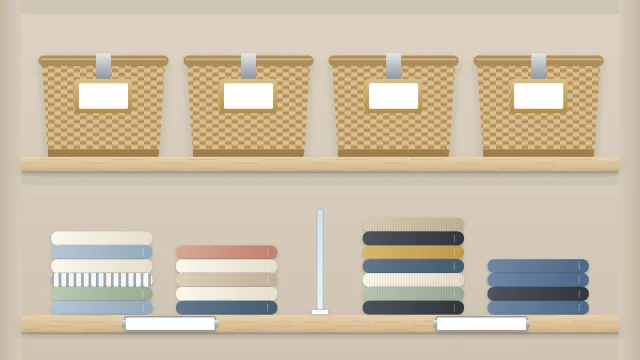
From below, you see only the front face of a bin, and a row of matching bins all look the same. A label on the front means you take down one bin instead of three. Keep the wording short and broad, such as a category and a season, and put each label at the same spot on every bin so your eye finds it quickly. The guide on how to label bins and shelves covers label types and wording.
Use shelf dividers for soft stacks
Some things are easier to store without a bin: a stack of blankets, a couple of pillows, a pile of thick sweatshirts. Shelf dividers, the upright panels that slip onto or stand on a shelf, give those stacks walls. Each stack gets its own bay, so a leaning pile stops at the divider instead of spreading along the shelf.
Keep stacks low enough that you can lift the whole pile with two hands. Divider designs attach in different ways, and some only fit shelves of a certain thickness, so compare the product instructions with your shelf before you buy.
Use the space up to the ceiling with care
Many closets have a tall gap between the upper shelf and the ceiling. It is tempting to stack a second row of containers on top of the first, and sometimes that works. Two conditions decide it: you can see what is up there, and you can reach it from your step stool without leaning or stretching past the front row.
If both are true, keep the second row for the lightest things you own, such as a spare pillow. If either fails, leave the gap empty.
Reach the shelf safely
Use a stable step stool, set on a level floor and used as its instructions describe, rather than a chair or the edge of the bed. Open it fully, stand facing the shelf, and bring the bin down to waist height before you step off.
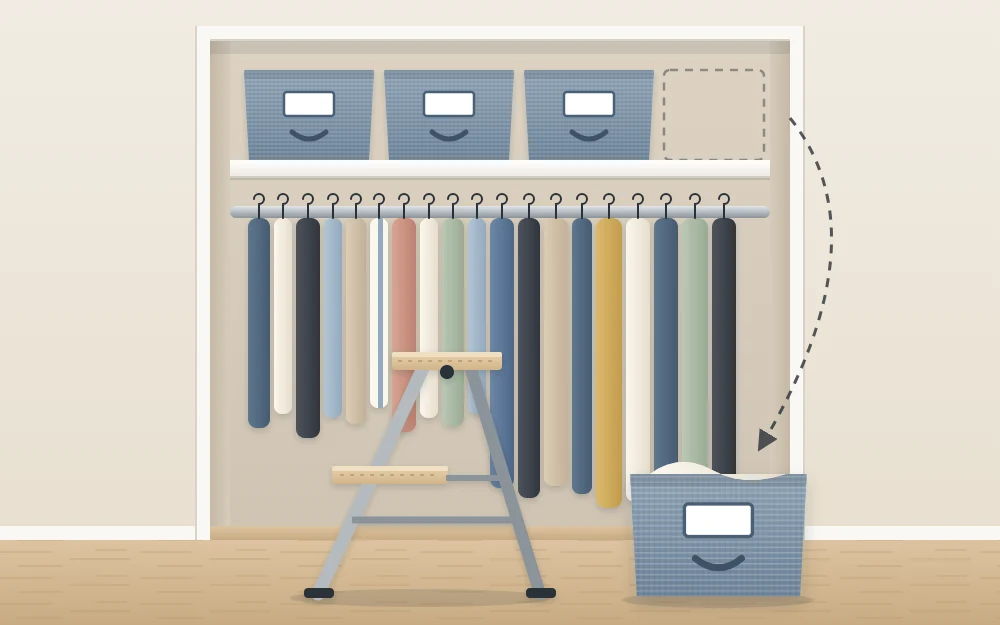
Keep the stool in or beside the closet so it is the nearest thing to hand.
Review the shelf at each season change
An upper shelf drifts slowly because nobody looks at it. Twice a year, when the off-season clothes come down and the other set goes up, take every container off the shelf, wipe the surface, and open each one. Remove what you no longer want, check that each label still matches the contents, and return the containers in the order you will need them.
Frequently asked questions
What should you store on the top shelf of a closet?
Store things you need only a few times a year: off-season clothes, spare bedding, occasion items, luggage and a small box of keepsakes. Bulky but light items suit the height best. Anything you use weekly, and anything that feels awkward to lift down from above your head, belongs lower in the closet.
How do I stop things falling off a high closet shelf?
Contain everything. Put loose items into bins of one size that sit in a row, and give soft stacks such as blankets their own bay between shelf dividers. Keep stacks low, and lift a whole bin down to search it rather than pulling one item from a pile at arm's length.
Can I stack bins up to the ceiling above the shelf?
Only if you can see the second row and reach it from a stable step stool without leaning. Keep that row for very light items. The shelf's limit is set by its manufacturer and its fixings, so check the product specifications if you have them, and leave the gap empty when in doubt.