Seasonal Closet Switch: How to Rotate Your Clothes
A repeatable nine-step routine for swapping warm- and cold-weather clothes: when to do it, what to gather, the order that keeps the two seasons from mixing, and a lighter version for mild climates.
At a glance
What you need
- Storage containers
- Labels and a marker
- Garment bags
- Donate bag
- Basket for repairs
- Cloth for wiping shelves
Twice a year, half of what hangs in your closet stops being useful for a few months. A seasonal closet switch moves those clothes out of the easiest space to reach and brings the other half in. Done in a set order, it also works as a light review of everything you own, so less ends up in storage that should have left the house.
The steps below are the same every time, which is what makes the job quicker with each round. Plan on a couple of hours for an average closet, more if it is very full or if a lot needs washing first.
Pick the timing by your weather
Go by the weather where you live, not by a date on the calendar. A good signal is a week or two in which you have not reached for anything from the outgoing season.
Weather rarely changes cleanly, so keep a few transitional pieces in the closet through the mixed weeks: a light jacket, a couple of long-sleeved layers, one warm sweater. They can go into storage a few weeks later, or stay all year if you use them.
Do you need a full switch?
Not every home does. If your climate is mild, the two sets of clothes overlap so much that packing one away makes little sense. If your closet is large, everything may fit all year.
In both cases a lighter version works: move the current season into the prime zone, meaning the part of the rod and shelves that is easiest to see and reach, and shift the rest to a secondary zone at the far end of the rod, on higher shelves or at the back. The steps are the same, with a shorter journey.
What to gather before you start
- The stored containers holding the incoming season
- Empty containers or space for the outgoing season, if you need more
- Labels and a marker
- Garment bags for coats and structured pieces
- A donate bag and a small pile or basket for repairs
- A cloth for wiping shelves
Clear the bed. It is the best sorting surface in the room.
The switch, step by step
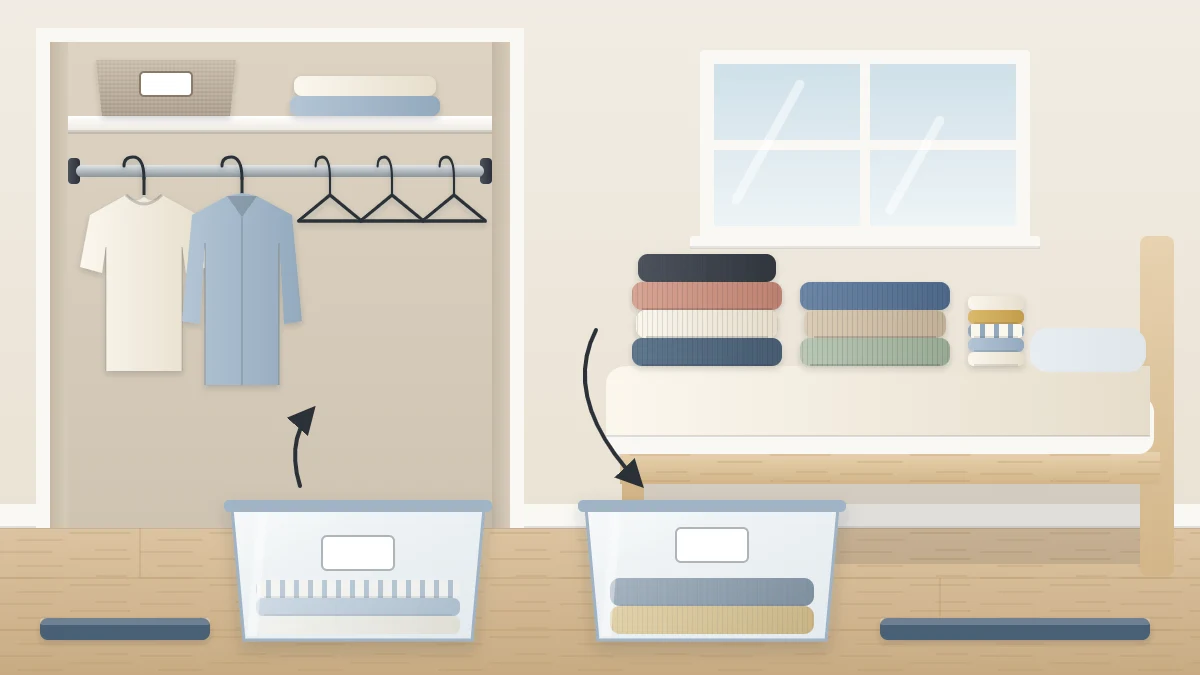
- Bring out the stored containers. Set them beside the bed, unopened for now, so you know how much is coming in.
- Pull the outgoing season from the closet by category. All the heavy sweaters, then all the coats, and so on. Lay each category on the bed in its own pile.
- Check each outgoing item. Sort into keep, repair and donate. If you did not wear it during the season that just ended, ask why. Storing things you will not wear costs space twice a year. For the hard cases, the questions in what clothes to keep will help.
- Clean what will be stored. Launder or clean each item as its care label says, and let everything dry fully before packing. This step can stretch the project over a day or two.
- Wipe the emptied shelves and rod section. With the space bare, dust the shelves, wipe the rod and vacuum the floor beneath.
- Move the incoming season in, zone by zone. Open the stored containers and put each category in its place. Try on anything you are doubtful about, and send what no longer fits or is damaged to the donate bag or the repair pile.
- Pack the outgoing season in labeled containers. Fold knits, put heavier items at the bottom, and label each container with its contents and season.
- Put the containers away. Return them to their storage place with the labels facing out.
- Make a note. Write down anything that needs repairing or replacing before the season is underway, and anything you noticed you have too many of.
Why the order matters
Two points in the sequence save the most trouble.
The first is checking outgoing items before they are cleaned and packed. It is tempting to move the whole season straight into bins and decide later, but later is six months away and you will have forgotten which pieces you never wore. Deciding now means you clean and store only what you will use.
The second is emptying before filling. If the incoming clothes go in while the outgoing ones are still on the rod, the two sets mix, and the zones blur before the season begins. A bare section of rod also shows you how much room each category really has.
Tip
If the incoming season does not fit comfortably in the space the outgoing one left, do not squeeze it in. Reduce the category or give it a larger zone now, while everything is out.
Packing and putting away
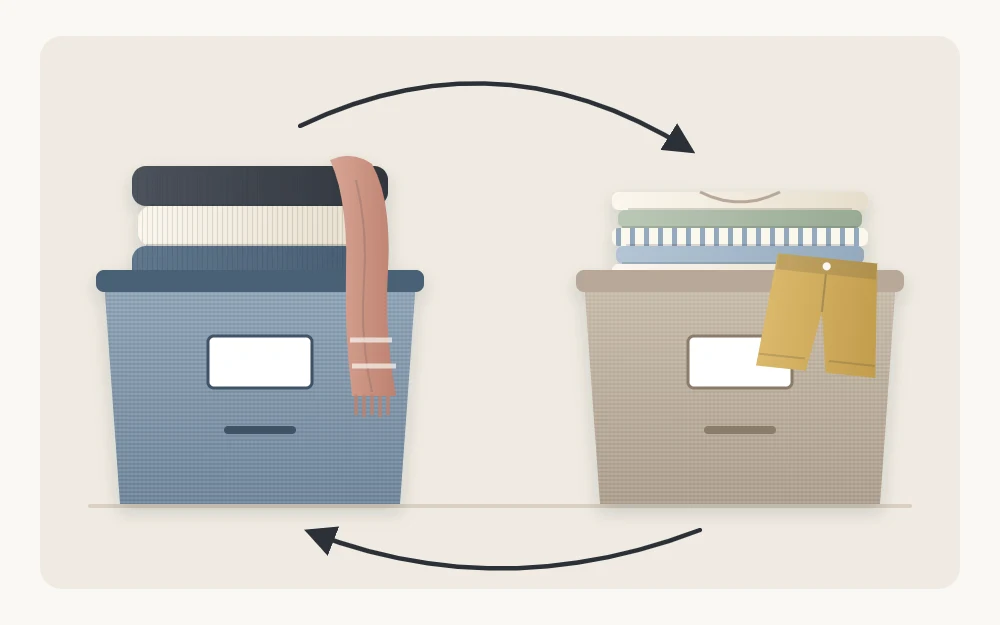
The same containers usually serve both seasons: as the incoming clothes come out, the outgoing ones take their place. Replace or rewrite each label so it describes what is inside now.
Container types, how to pack them and where in the home to keep them are covered in the guide to seasonal clothing storage, so they are not repeated here.
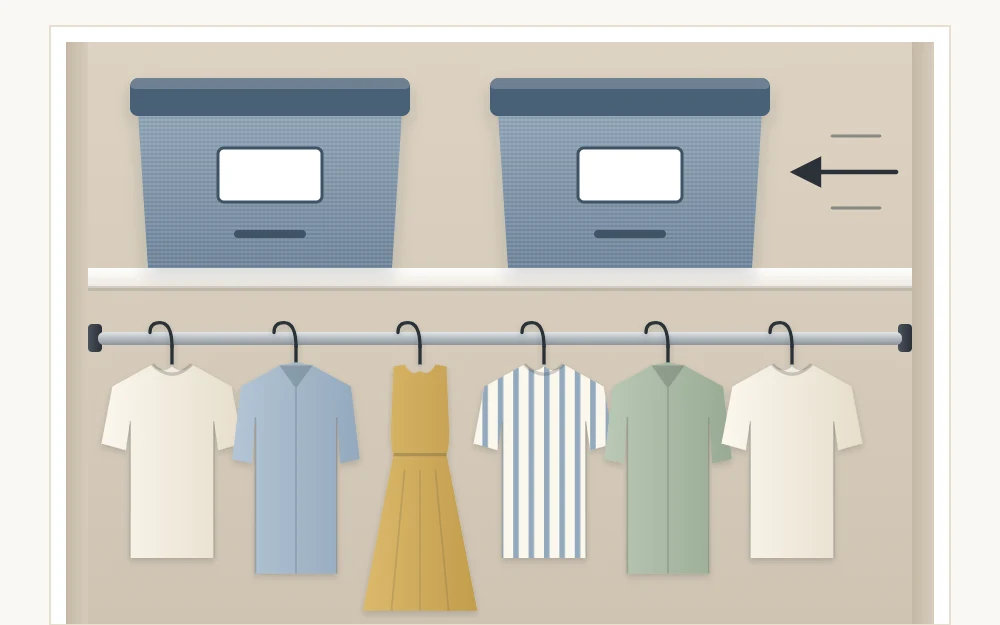
If the containers live on the upper shelf, keep each one light enough to lift comfortably, and use a stable step stool as its instructions describe, never a chair.
Make the next switch easier
A few small things done now shorten the job next time:
- Keep your note of repairs and replacements where you will see it, and deal with repairs while the item is still out.
- Record roughly how long the switch took and how many containers you used.
- Empty the donate bag within the week.
- Put a reminder on your calendar for the approximate time of the next switch.
The switch is the seasonal layer of a wider closet maintenance routine. The daily and weekly parts of that routine keep the zones in order between now and the next change of weather.
Frequently asked questions
When should I switch my closet for the season?
Go by your local weather, not the calendar. A useful signal is a week or two in which you have not worn anything from the outgoing season. Keep a few transitional pieces, such as a light jacket and one warm sweater, in the closet for the mixed weeks.
Do I need to wash clothes before packing them away for the season?
Yes. Clean each item as its care label says and let it dry fully before it goes into a container. Check the items first and set aside anything you will not wear again, so that you only clean and store what you plan to use.
What if I live somewhere with mild weather all year?
You may not need storage at all. Move the clothes for the current season to the part of the closet that is easiest to see and reach, and shift the rest to the far end of the rod or to higher shelves. The review and cleaning steps still apply.