A Closet Maintenance Routine That Keeps It Organized
Closets drift when things come in, go back in the nearest gap and wait in laundry baskets. This three-layer routine of daily, weekly and seasonal steps, plus four small habits, keeps the order you built.
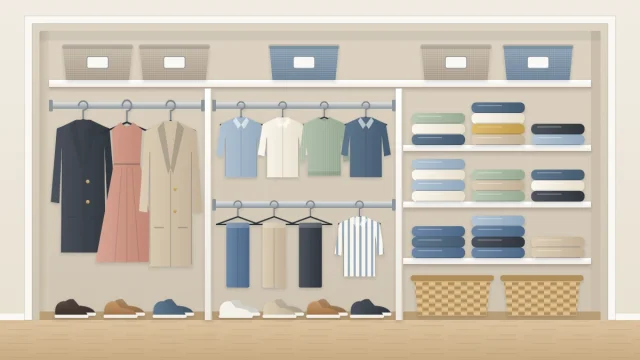
Organizing a closet once is a project. Keeping it that way is a habit, and the habit is much smaller than the project. If you have sorted everything before and watched it slide back within a couple of months, what was missing was probably a closet maintenance routine, not effort or willpower.
The routine below has three layers: a few seconds a day, a few minutes a week and a longer session at each change of season. Each layer catches what the one before it lets through.
Why closets drift
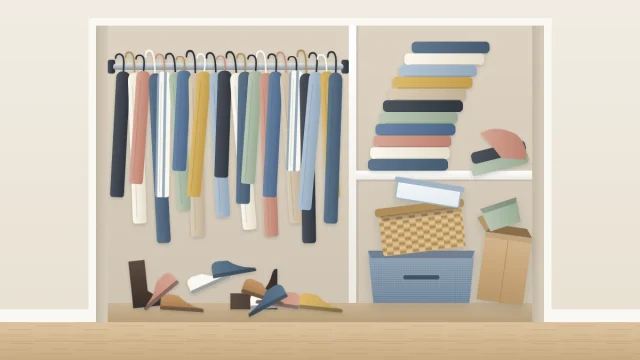
A closet rarely collapses in one go. It drifts, and three causes account for most of it.
- Things come in and nothing goes out. The space was sized for what you owned on organizing day. Every addition since has squeezed something else.
- Things go back in the nearest gap. When you are in a hurry, the shirt goes wherever there is room, and the zones blur a little each time.
- Laundry gets parked. Clean clothes wait in the basket, worn-once clothes wait on a chair, and neither is in the closet where you look for it.
The routine answers each of these directly.
Daily: return and park, in under a minute
Two actions, both done as you change clothes.
Return what you took out to its zone. If you tried two sweaters and chose one, the other goes back on the sweater shelf now, not onto the bed.
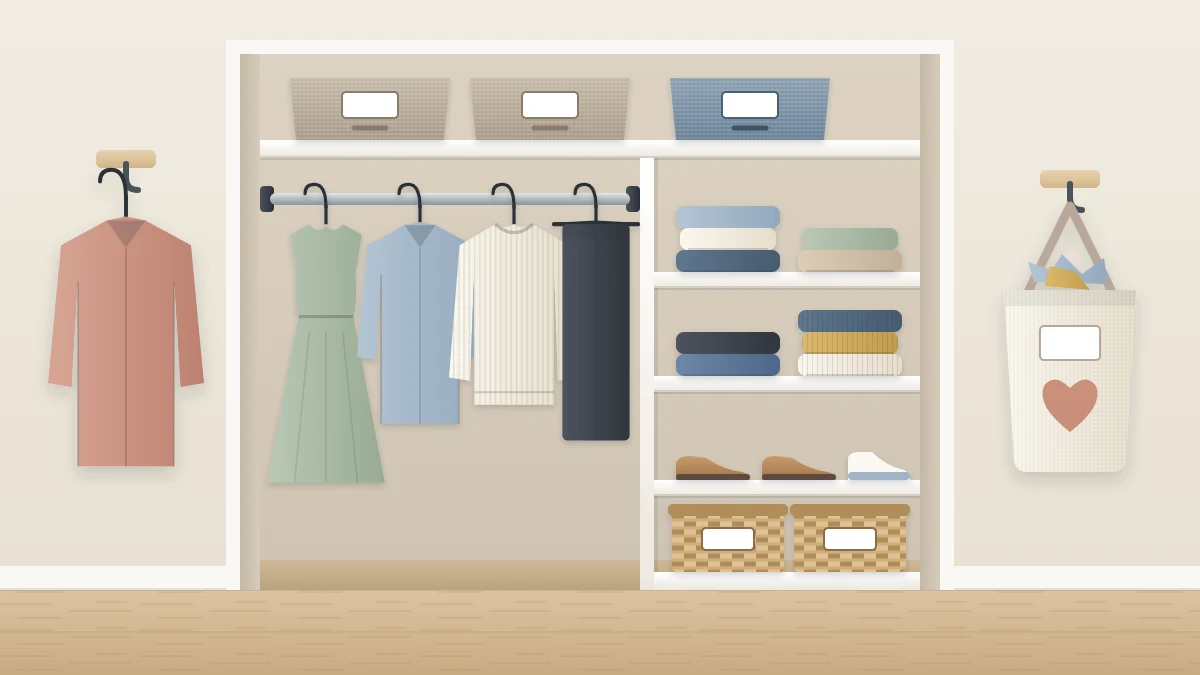
Give worn-again clothes one set spot. Jeans you will wear tomorrow and a sweater worn for an hour are neither clean nor ready for the wash, and with no home they end up on a chair. Pick a single place for them: a hook, a small bin, or a short marked section of the rod. When that spot is full, something in it goes to the laundry or back to its zone.
Good to know
If you add a hook for worn-again clothes, whether it is a removable adhesive hook or one fixed to the wall or door, follow the manufacturer’s instructions for how to attach it and how much to hang on it.
Weekly: a few minutes with the laundry
Tie the weekly reset to putting clean laundry away, because you are already standing at the closet with your hands on the clothes. While you are there:
- Straighten any folded stacks that have started to lean.
- Re-hang anything facing the wrong way or sitting in the wrong section.
- Return strays: the belt on the shelf, the shoes outside the rack, the scarf on the doorknob.
- Check the donate bag, and take it out of the house if it is full.
This usually takes a few minutes, a little more after a busy week. If it regularly takes much longer, that is a sign something in the layout is not working, which the last section covers.
Seasonal: switch, review, clean
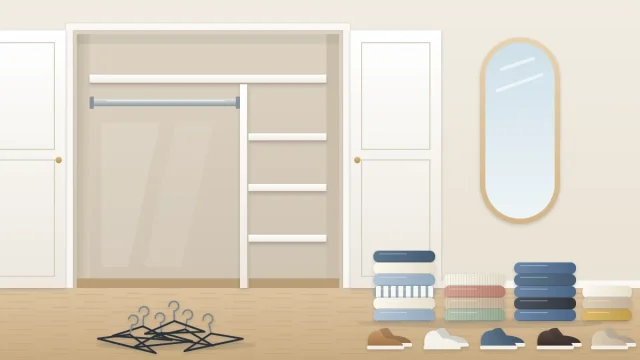
Two to four times a year, depending on your climate, the closet needs a longer look. Set aside an hour or two; a large or very full closet will take more.
- Switch seasons. Bring forward what you will wear in the coming months and move the rest back or into storage. The guide to the seasonal closet switch gives the order of steps.
- Review each category against its space. If the T-shirts no longer fit their shelf without cramming, either some leave or the zone grows at the expense of another. A shortened version of the process in how to declutter a closet works well here, one category at a time.
- Clean. With sections emptied, wipe the shelves and the rod, and vacuum the floor and corners.
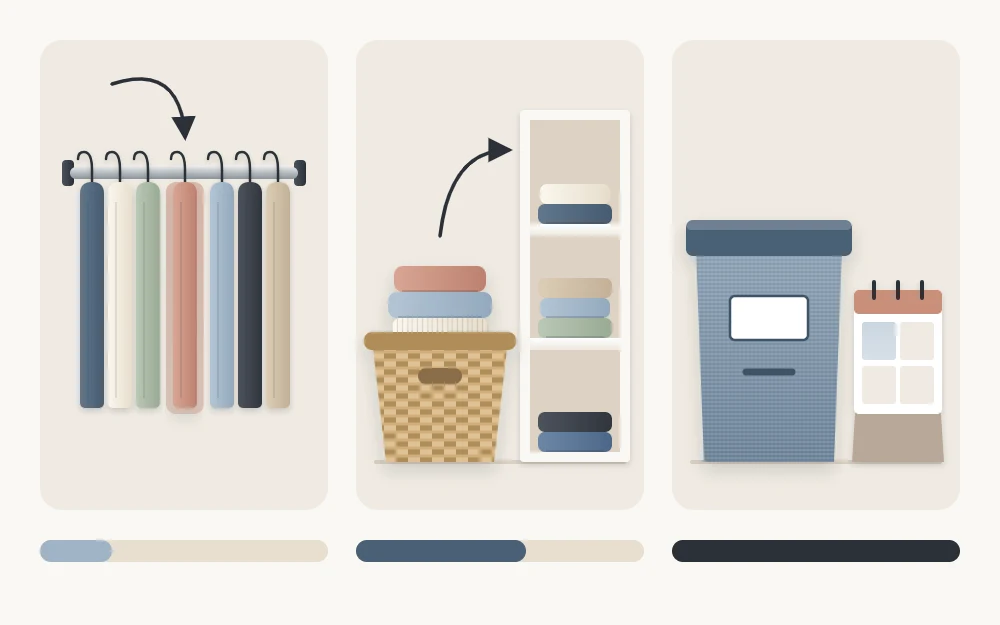
The routine at a glance
| When | Rough time | What |
|---|---|---|
| Daily | Under a minute | Return items to their zones; put worn-again clothes in their set spot |
| Weekly, with laundry | A few minutes | Straighten stacks, re-hang, return strays, empty a full donate bag |
| Each season | An hour or two, depending on the closet | Switch seasons, review categories against their space, wipe and vacuum |
Four habits that hold it together
A permanent donate bag
Keep a bag or box in the closet at all times. The moment you notice that something no longer fits or never gets worn, it goes in. Without the bag, that item goes back on the hanger and the thought is lost.
One in, one out, when a category is full
This is a guideline, not a law. It applies only when a category has filled its zone: a new pair of jeans then means choosing a pair to leave. While there is room to spare, simply add the item.
An empty-hanger section
Move each empty hanger to one end of the rod as you take a garment off it. Clean laundry gets hung faster, and you can see spare capacity at a glance. When the empty hangers run out, the rod is at its limit.
A clear floor
The closet floor is where drift shows first. Apart from a shoe rack or a bin that lives there on purpose, keep it empty, and treat anything that lands on it as a stray for the weekly reset.
When the system needs changing, not more discipline
Sometimes the routine keeps failing in the same spot. That is information about the layout, not about you. Two signs are worth acting on:
- A category that never fits its zone. If the sweaters overflow every week, the shelf is too small for them. Give them more room, or reduce the number.
- A bin nobody opens. Either its contents are not needed, or it sits somewhere too awkward to reach. Empty it, decide again and relocate it.
Other patterns, such as daily items stored too high or stacks too tall to stay upright, are covered in the guide to common closet organization mistakes. Change one thing, run the routine for a few weeks, and see whether that spot holds.
Frequently asked questions
How often should I reorganize my closet?
A full reorganization should rarely be needed if you keep up small steps: return items to their zones daily, straighten and re-hang for a few minutes each week when you put laundry away, and review each category against its space at the change of season.
Where should I put clothes that are worn but not dirty?
Give them one set spot so they stop landing on a chair: a hook, a small bin or a short marked section of the rod. When that spot fills up, move something from it to the laundry or back to its zone before adding more.
Why does my closet get messy again so quickly?
Usually because new items arrive without anything leaving, things are put back in the nearest gap, or laundry waits outside the closet. If one area fails again and again, the layout may be at fault: a zone too small for its category, or a bin that is awkward to reach.