How to Declutter a Closet: A Step-by-Step Method
A calm method for reducing an overfull closet: set up four destinations, work one category at a time, handle each item once, and end every session with the outgoing clothes out of the room.
At a glance
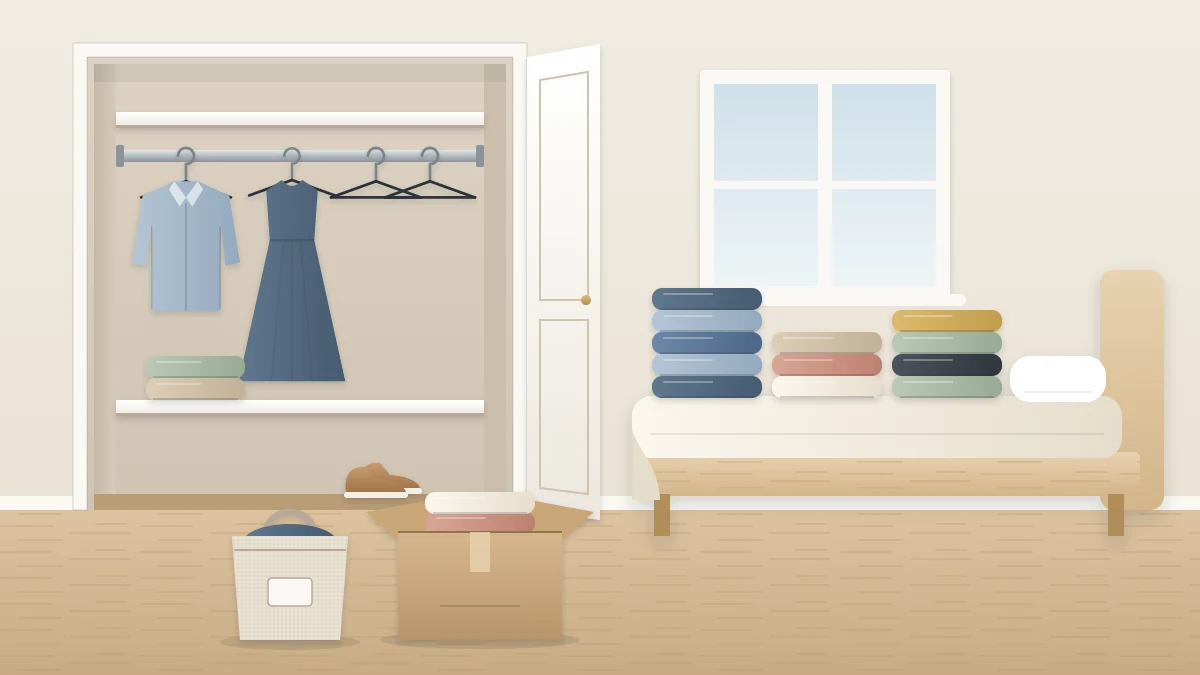
What you need
- A cleared bed or table as a sorting surface
- A box or bag for items to donate or sell
- A bag for items to recycle or discard
- A lidded box for decide-later items
- A marker and tags for the containers
- A cloth for wiping shelves
- A timer
An overfull closet is hard to use no matter how it is arranged, so reducing what is in it comes before any organizing. Knowing how to declutter a closet is mostly knowing how to set the job up so that it can stop cleanly at any point without leaving the room in chaos.
The method below works through one category at a time, gives every item one of four destinations, and ends each session with the outgoing clothes out of the room. Nothing in it asks you to judge your clothes, only to decide where each one goes.
Set up before you start
Ten minutes of preparation saves a lot of wandering about with armfuls of clothes. You need a sorting surface and four destinations.
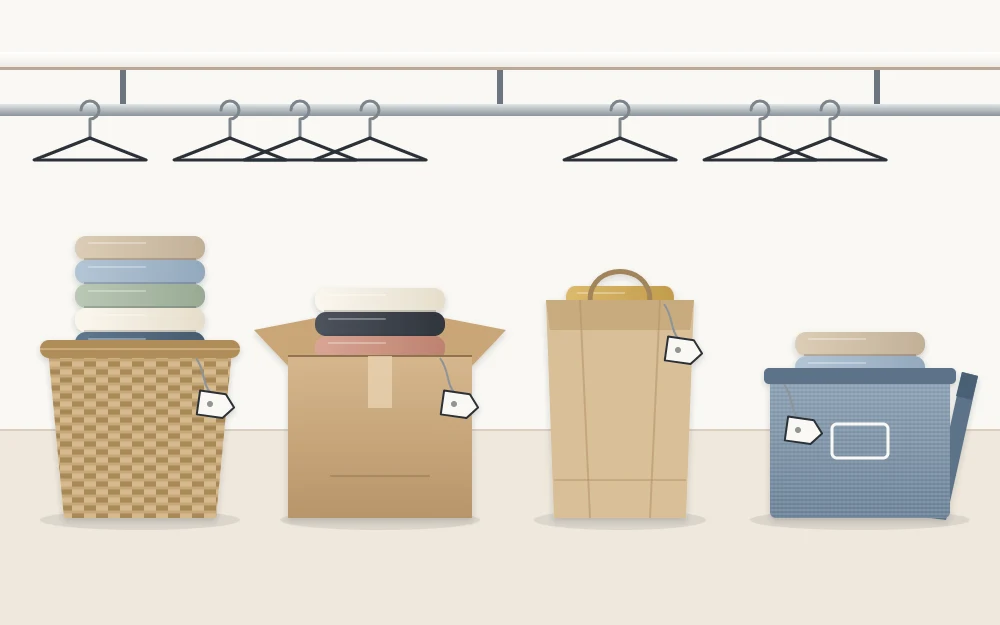
- A sorting surface. Clear the bed or a table completely. You want room to lay a whole category out where you can see it.
- Keep. A clear area of the sorting surface. Keepers go back into the closet at the end.
- Donate or sell. A donate box or bag for items in usable condition that you no longer want.
- Recycle or discard. A second bag for items too worn or damaged to pass on.
- Decide later. One box with a lid, for the few items you cannot decide about today.
Why one category at a time
The common advice to empty the entire closet onto the bed works only if you can finish in one go. If you are interrupted, you are left with everything you own in a heap and nowhere to sleep.
Working by category avoids that. Take out all the tops, deal with them, and put the keepers back before touching the pants. At the end of every category the room is back in order, so you can stop after one, three or all of them. Seeing a whole category together also shows you duplicates that are invisible while they hang in different parts of the closet.
The method, step by step
- Pick a category. Start with one that is easy for you, such as T-shirts or exercise clothes. Leave occasion wear and anything with strong memories for later.
- Gather every item in it. Collect them from the closet, drawers, the laundry and anywhere else they live, and lay them on the sorting surface.
- Pick up one item and decide. Handle each item once. Use the four checks in the next section and place it in a destination before picking up the next.
- Use the decide-later box sparingly. If you have gone back and forth on an item for more than a minute, put it in the box and move on. Do not let it become the default.
- Return the keepers. Put the kept items back together, in one place, before starting another category.
- Repeat or stop. Move to the next category if you have time and energy. If not, go to the finishing steps.
Tip
Set a timer for each session and stop when it rings, even mid-category. Decisions get slower and worse as you tire, and a fresh half hour tomorrow is worth more than a weary hour tonight.
Four checks for each item
You do not need a complicated system. Four plain questions settle most items in a few seconds:
- Does it fit now? Not last year and not after some future change. Now.
- Is it in usable condition? Look for wear, damage and fastenings that no longer work. If it needs a repair, ask honestly whether you will do it.
- Has it been worn in the past year? A full year covers every season, so a winter coat is not penalized for sitting unused in summer.
- Would you choose it again? If you came across it today, would you take it home?
An item that passes all four is an easy keep. One that fails several is an easy release. The items in between are the slow ones, and the guide on deciding what clothes to keep goes through those cases, including clothes kept for sentimental reasons.
Handling the decide-later box
The box exists to keep the session moving, not to store indecision forever. Three rules stop it turning into clutter with a lid on:
- Close it at the end of the session.
- Write the date on it, along with a review date a few months ahead.
- Put the review date in your calendar and store the box outside the closet.
On the review date, open it and note what you had forgotten was in there. Anything you went looking for in the meantime has earned its place. The rest is usually much easier to let go of than it was the first time.
Finish the session properly
A session is not finished when the last item is sorted. It is finished when the outgoing clothes are gone and the closet is back in use.
- Bag the outgoing items. Close the donate and discard bags so nothing drifts back out.
- Move them out of the room the same day. Put them by the front door or in the car. Bags left in the bedroom tend to get reopened. What happens to them next is covered in the guide on what to do with clothes you no longer wear.
- Wipe the empty space. While a shelf or a section of rod is clear, dust it with a dry or barely damp cloth and let it dry.
- Put the keepers back by category. Keep each kind together, even if the final arrangement comes later.
How long it takes and what comes next
There is no honest single figure, because the time depends on how much the closet holds and how quickly you decide. A small category may take a quarter of an hour; a packed closet can take several sessions over a week or two. Timed sessions of about 30 to 45 minutes suit most people better than one long day.
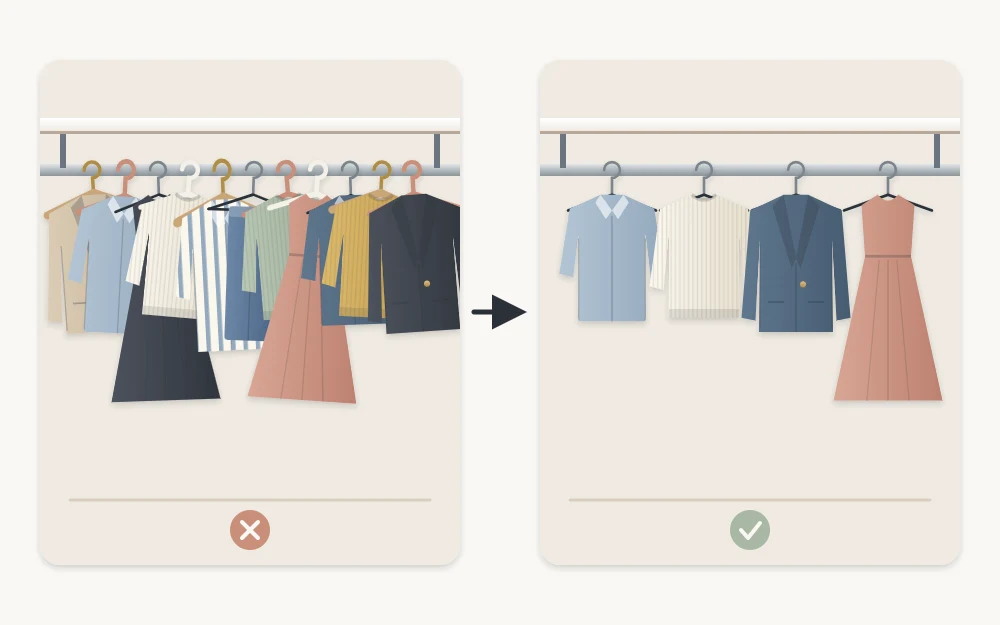
Once the volume is down, the remaining clothes can be given proper homes. The full sequence for that is in the guide on organizing a closet step by step.
Frequently asked questions
Should I empty the whole closet before decluttering?
Only if you are sure you can finish in one go. Working one category at a time is safer: you take out all the tops, decide on them and return the keepers before starting the pants. The room is back in order after each category, so you can stop whenever you need to.
What do I do with clothes I cannot decide about?
Put them in a single decide-later box, close it, write the date and a review date on it, and store it outside the closet. On the review date, open it again. Items you never missed are usually much easier to release, and anything you went looking for goes back in the closet.
How long does it take to declutter a closet?
It depends on how much the closet holds and how fast you make decisions. A small category can take around fifteen minutes, while a very full closet may need several sessions across a week or two. Short timed sessions keep decisions sharper than one long day.