What to Do with Clothes You No Longer Wear
Sort outgoing clothes by condition, then choose a route: give, donate, sell or swap what is wearable, and recycle or reuse what is not. Plus the habits that get the bags out of the house on time.
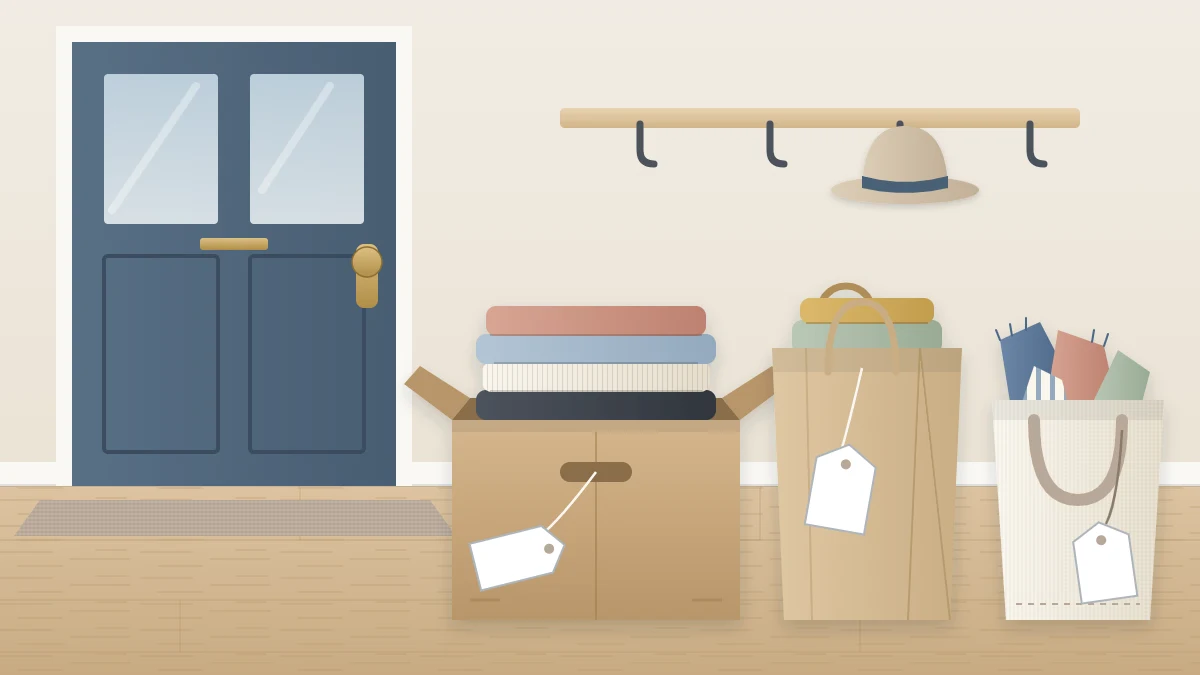
The decluttering is done, and now there are bags on the bedroom floor. This is where many clear-outs stall: the clothes you no longer wear have left the closet but not the house, and after a few weeks the bags are part of the furniture.
Moving them on takes two decisions per item: what condition is it in, and which route suits that condition. Make both on the same day you sort, and the bags leave within the week. If you are still unsure about some pieces, the guide on what clothes to keep will help you finish the pile first.
Sort by condition first
Condition decides the route, so split the outgoing clothes into two groups before thinking about where anything goes.
- Clean and wearable: no stains, no holes, working zippers, all buttons present. Someone else could put it on tomorrow.
- Worn out or damaged: stained, torn, stretched, faded or missing parts. Nobody would choose to wear it as it is.
Be strict. Giving away something unwearable hands the disposal job to someone else. Use a separate bag or box for each route as you go, so nothing has to be sorted twice.
Routes for clean, wearable clothes
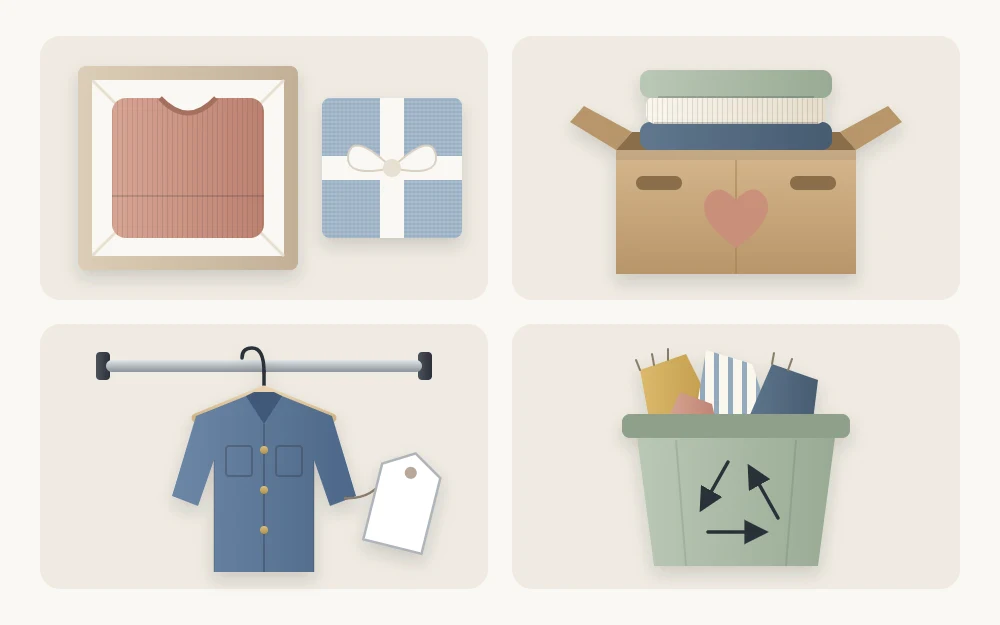
Give to someone you know
A friend, a relative or a neighbor of the right size is the quickest route. Ask before you deliver a bag, and make it easy for them to say no.
Donate locally
Local charities and community groups often accept clothing, but what they take differs from one to the next and can change with the season. Check what an organization accepts, and when, before you drop anything off. Some want only certain kinds of items, and some pause donations when they are full.
Sell
Selling through a consignment shop or an online resale platform returns some money, and it costs time: photographing, listing, answering questions, packing and posting, or carrying items to the shop and waiting. It makes sense for a few items in excellent condition that justify the effort. For an ordinary bag of everyday clothes, it rarely does.
Swap
A clothes swap with friends or a community group moves items on the same day. Agree at the start what happens to the leftovers, so they do not come home with you.
Routes for worn-out or damaged clothes
Clothes past wearing still have options before the trash.
- Textile recycling. Some areas have drop-off points or take-back programs for worn textiles. Availability varies a great deal by area, so check with your local waste authority to see what exists near you and what it accepts.
- Reuse at home. Soft cotton items such as old T-shirts and towels cut down well into cleaning rags. Keep a small, fixed number, enough to fill one container, so the rags do not become a new pile.
- Trash, as the last resort. If there is no recycling route nearby and the item has no use as a rag, it goes in the household trash. That is a reasonable outcome for something that has been fully worn out.
For general guidance on cutting down what a household throws away, see the U.S. Environmental Protection Agency’s page on reducing waste.
Condition and options at a glance
| Condition | Options |
|---|---|
| Excellent, barely worn | Give, sell, swap or donate |
| Good, clearly wearable | Give, swap or donate |
| Wearable with a small fault | Repair first, or ask the organization whether it accepts such items |
| Worn out, stained or torn | Textile recycling where available, rags, then trash |
Prepare the items before they leave
Wash or clean everything you plan to give, donate, swap or sell, following each garment’s care label, and let it dry fully. Clean clothes are more likely to be accepted and used.
Then check the small things:
- Empty every pocket.
- Fasten buttons and zippers, and pair up anything that comes in a set.
- Fold items rather than stuffing them, so they arrive in the condition they left.
- Use bags or boxes you do not need back.
Get the bags out of the house
The route matters less than the exit. A few habits keep the outgoing clothes moving:
- Decide the route on the day you declutter. Every bag should have a destination before you stop for the day.
- Move the bags out of the bedroom. Put them in the car, or by the front door where they are in the way.
- Set a deadline. Pick a day within the next week or so and put it on your calendar like any other errand.
- Combine the trip. Attach the drop-off to a journey you already make.
Tip
Close the bags once they are sorted. An open bag invites second thoughts, and items drift back into the closet one at a time.
Keep the to-sell pile from becoming clutter
The to-sell pile is the one most likely to stay. It feels valuable, so it waits for a free afternoon that does not arrive, and the clothes take up as much room as they did before.
Give it a time limit when you create it. Choose a date, perhaps a month ahead, and write it on the box. List the items promptly, and when the date comes, donate whatever has not sold. The limit protects the space you just cleared, which was the point of the exercise.
Keep the pile small as well: one box, not a corner of the room. If it does not fit in the box, the least promising items go straight to the donate bag.
Make it part of the next clear-out
The next round goes faster once the routes are known. Note which organization took what, where the nearest textile drop-off is, and how long selling really took you. Then, the next time you work through the steps of decluttering a closet, each bag has a destination before it is full.
Frequently asked questions
What can I do with clothes that are too worn to donate?
Look for a textile recycling drop-off or take-back program in your area; availability varies, so ask your local waste authority what exists and what it accepts. Soft cotton items can be cut into cleaning rags. If neither option is available, the household trash is the last resort.
Is it better to sell or donate unwanted clothes?
Selling returns some money but takes time for listing, packing or trips to a shop. It suits a few items in excellent condition. For everyday clothes, donating or giving them away is usually quicker. If you sell, set a date after which unsold items are donated.
Should I wash clothes before donating them?
Yes. Clean each item as its care label directs and let it dry fully, then empty the pockets and fasten buttons and zippers. Check what the organization accepts before you drop anything off, because what is wanted differs from place to place.