Closet Zones: How to Group a Closet by Category
How to divide a closet into zones that each hold one category, place them by how often you reach for them, mark their edges, and adjust the layout after a few weeks of real use.
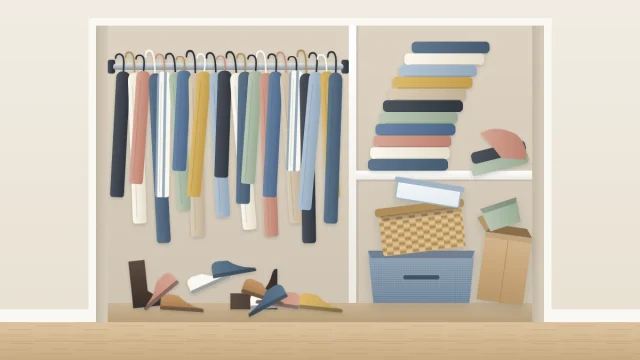
A closet that is tidy for a week and then drifts usually has one problem: nothing in it has a fixed place. Clothes go back wherever there is a gap, the gaps move, and within a month you are searching again.
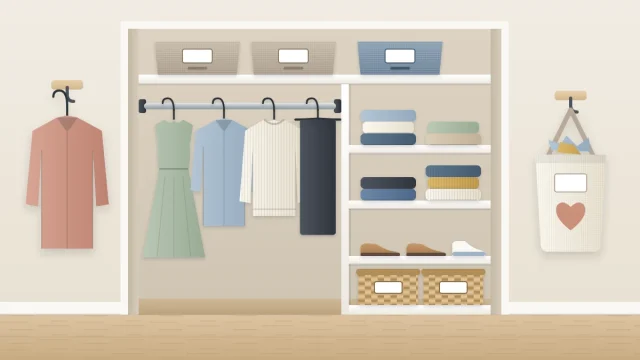
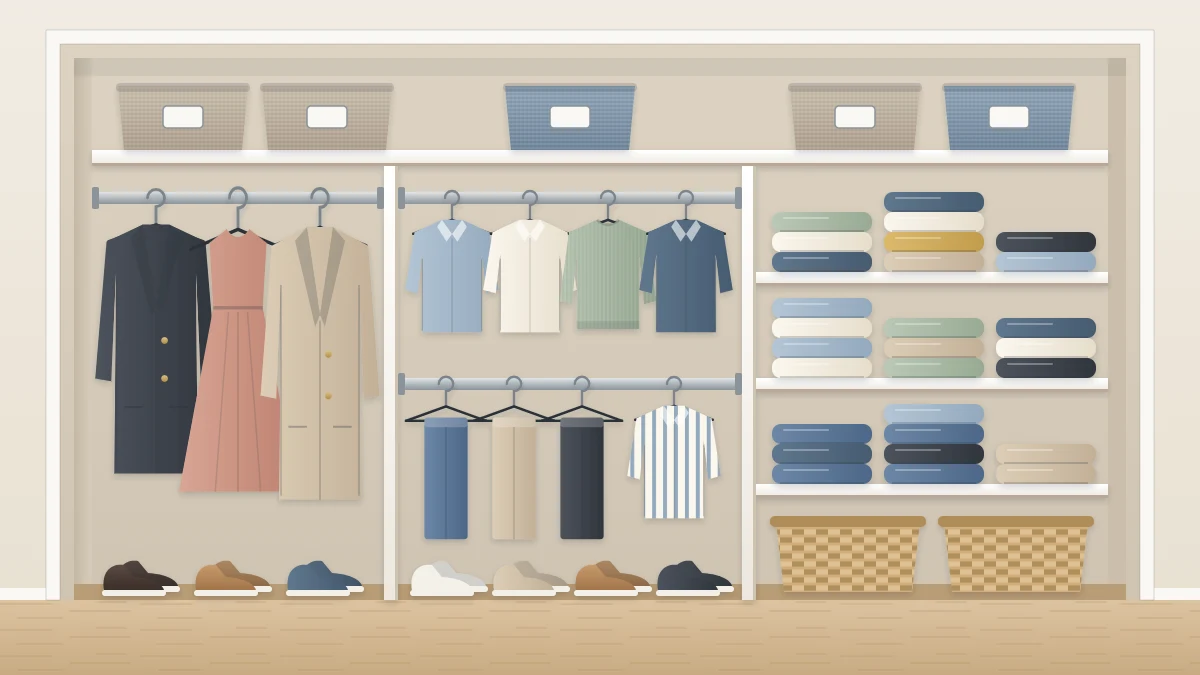
Closet zones solve this. A zone is an area of the closet that holds one category and nothing else, placed according to how often you reach for that category. Once the zones are set, putting away stops being a decision.
What zoning means
Zoning has two parts. The first is dividing what you own into categories, a category being a kind of item you look for together. The second is giving each category its own stretch of rod, shelf, drawer or floor, and keeping it there.
The zone belongs to the category, not to individual items. A shirt does not have a personal spot; it goes anywhere inside the shirt zone. That looseness is what makes the system quick to use and easy to keep.
The reach rule
Not all closet space is equally useful. Stand in front of your closet and notice where your hands go without stretching or bending. That band, roughly between your shoulders and your knees and at the front of the shelves, is prime space.
- Prime space is for categories you use daily or several times a week.
- Above your head is for occasional and off-season items, since getting to it takes a step stool.
- Near the floor and at the back is for things you need now and then, because it means crouching or moving something else first.
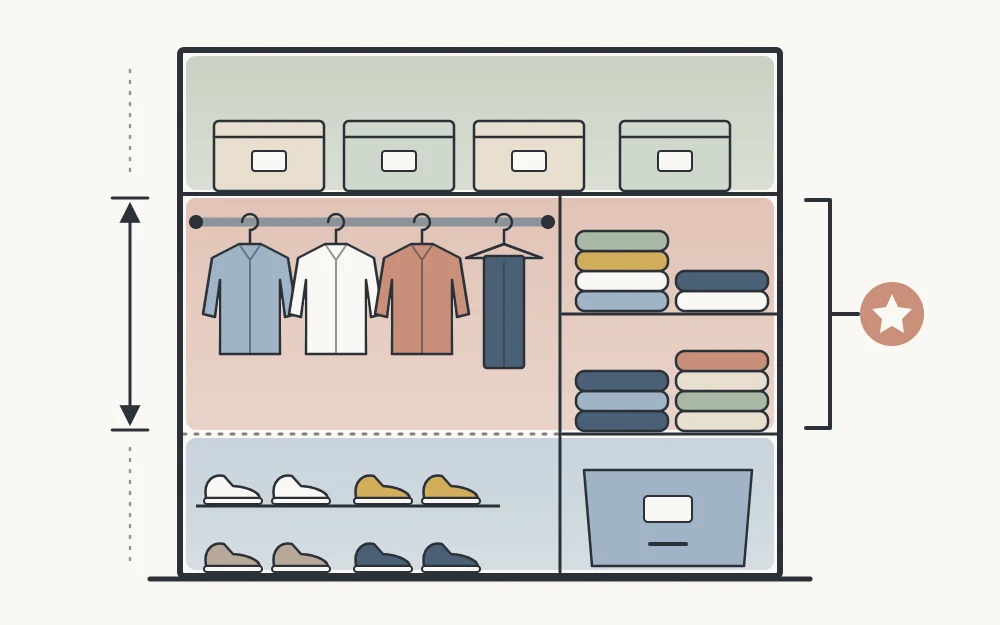
The band sits at a different height for each person, so judge it by your own reach instead of copying a measurement. If two people share the closet, each side can follow its own user. For what belongs in the hardest space to reach, see the guide to organizing the closet top shelf.
Choosing categories that match how you get dressed
The best categories are the ones you already think in. When you get dressed for work, exercise or bed, you are looking for a group of things. Make those groups the categories. A typical list might be:
- Everyday tops
- Everyday pants
- Work clothes
- Exercise clothes
- Sleepwear
- Outerwear
- Occasion wear
Your list may look quite different, and that is fine. What matters is keeping it short. With a handful of categories you can remember every zone without thinking; with twenty, the borders blur and items start to wander. If you find yourself unsure where something belongs, the categories are probably too fine.
Each category also needs a form of storage. Whether a group is better on hangers or on a shelf depends on the garments, which the guide on what to hang and what to fold covers.
A sample zone plan
This table shows one way zones can be laid out. Treat it as an example to adapt: your closet’s shape and your own habits decide the real answer.
| Zone | What goes there | How often it is reached |
|---|---|---|
| Rod, front and center | Everyday tops and work clothes | Daily |
| Shelves at chest height | Folded everyday pants and sweaters | Daily to weekly |
| Lower shelf or drawer | Exercise clothes and sleepwear | Several times a week |
| Far end of the rod | Outerwear and occasion wear | Weekly to a few times a year |
| Floor, on a low rack | Shoes in regular use | Daily to weekly |
| Upper shelf | Off-season items in bins | A few times a year |
Sub-sorting inside a zone
Within a zone, a second level of order can help you find one item quickly. Sort by type first: in the tops zone, T-shirts together, then shirts with buttons, then sweaters on hangers if you hang them.
After that, you can sort by sleeve length or by color if it helps you find things. Color order is optional. Some people locate clothes by color and find it useful; others never look at it. If keeping it up feels like a chore, drop it. The zone itself does most of the work.
What zones do for you day to day
Two benefits show up within the first week.
Putting away gets fast. With laundry in your arms, the only question is which category each piece belongs to. You are not hunting for space or rearranging anything.
Overflow becomes obvious. When a category no longer fits its zone, you see it at once: the stack is too tall or the hangers will not slide. That is a clear signal to edit that one category or give it a larger zone, well before the whole closet silts up.
Tip
Leave a little empty space in every zone. A zone that is completely full has no room for the item coming back from the laundry, and that item is the one that starts the drift.
Marking the zones
A zone only works if its edges are clear, especially when more than one person puts laundry away. A few simple markers do the job:
- Rod dividers. Small discs or tags that slip onto the rod where one category ends and the next begins.
- Shelf dividers. Upright panels that keep neighboring stacks apart and show where each zone stops.
- Labels. A word on the shelf edge or on a bin tells everyone what lives there. The guide on how to label closet storage explains the options.
Bins need labels most of all, because what is inside is hidden.
Adjusting after a few weeks
Treat the first layout as a draft. After two or three weeks of real use, look for the signs that a zone is in the wrong place: a category you reach for daily that sits too high, a zone that is always overflowing, or one that stays half empty.
Swap or resize those zones and leave the rest alone. A short regular check, as described in the closet maintenance routine, keeps the zones matched to what you actually own as it changes through the year.
Frequently asked questions
How many zones should a closet have?
As few as will cover how you get dressed. Many closets work well with five to eight categories, such as everyday tops, pants, work clothes, exercise clothes, sleepwear, outerwear and occasion wear. If you often hesitate over where an item belongs, merge two categories until the borders are obvious.
Do I have to arrange clothes by color inside a zone?
No. Color order is optional. Sort by type first, which does most of the work, and add color or sleeve length only if it helps you find things faster. If keeping a color sequence going feels like extra effort every time you put laundry away, leave it out.
What if a category does not fit in its zone?
That is the zone doing its job by showing the overflow early. You have two choices: reduce the category until it fits with a little room to spare, or give it a larger zone by shrinking one that is half empty. Avoid squeezing it in, because cramped zones are where disorder starts.