Small Closet Organization: How to Make a Small Closet Work
A small closet works when less goes in, every surface is used on purpose and off-season items live elsewhere. Here is how to use the height, the door, the rod and the space under short clothes.
A small closet cannot hold everything, and no product changes that. Organizing does not create space; it uses the space that is there. Accepting this early saves money, because the usual response to a cramped closet is to buy organizers that take up room of their own.
Small closet organization works when three things happen together: less goes in, every surface is used on purpose, and anything not in season lives somewhere else. The sections below take those in order, then deal with hangers, the space under your clothes, the floor and the light.
Decide what the closet is for
A large closet can be a general store for clothes, luggage, spare bedding and boxes. A small one cannot. Give it one job: holding the clothes and shoes you are using in the current season. Everything else is a candidate for another home.
Stating the job makes later decisions quick. A suitcase, a box of keepsakes or a winter coat in July is not being used this season, so it does not belong here.
Edit harder than you would for a big closet
In a small closet, every garment you keep takes space from one you use. Take everything out, group it by category and count each group. Then measure the rod: its length is fixed, and so is the number of hangers that fit on it without crushing the clothes. If the clothes you want to hang outnumber the space, the difference has to leave or be folded.
The same applies to shelves and floor. The guide on how to declutter a closet explains how to make the keep, donate and discard decisions one category at a time.
Use the height
Small closets are short on width, not always on height. Look at three levels.
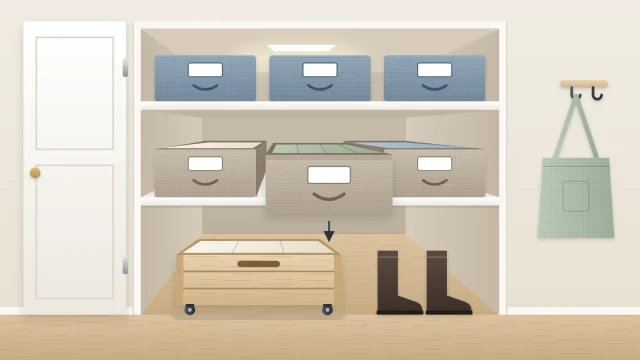
- The upper shelf. Bins turn it from a pile into storage you can pull down in one move. Put items used least often here.
- Above the upper shelf. If there is a tall gap between the shelf and the ceiling, the closet may allow a second shelf. Adding one is a matter for the shelf manufacturer’s instructions, which give the fixing hardware, the method and the load limit for your wall type.
- Below short garments. Shirts and folded-over pants leave open space beneath them. That space is covered in a section of its own below.
For anything above easy reach, use a stable step stool as its instructions describe.
Use the door
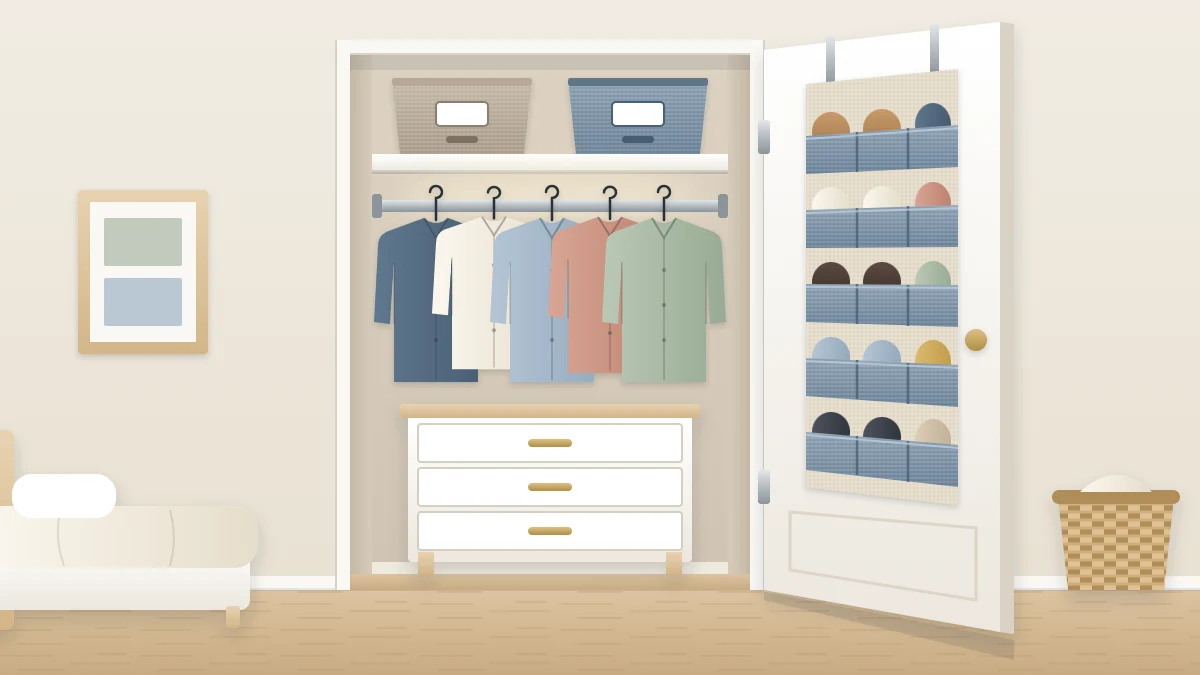
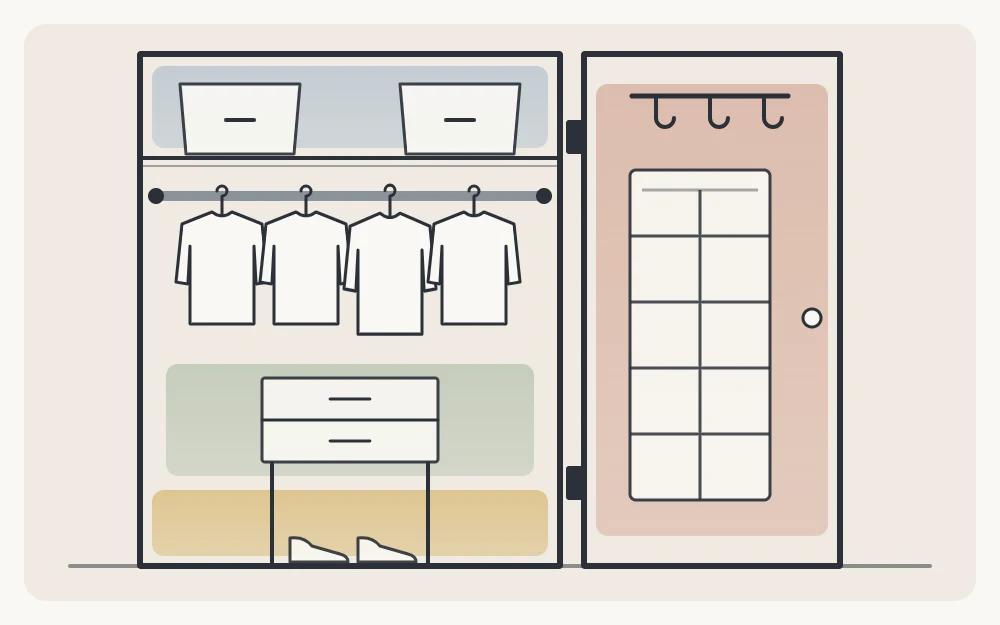
The inside of a hinged door is a full-height surface that usually holds nothing. Over-the-door hooks take a robe, tomorrow’s clothes or bags. An over-the-door pocket organizer holds flat shoes, scarves and small accessories in view.
Check two things first: that the door still closes fully with the hooks over its top edge, and that the filled organizer does not press against the clothes inside. Sliding doors offer no door storage, so skip this step if you have them.
Good to know
Anything hung on a door adds load to the door and its hinges. Stay within the limits stated for the organizer and for the door hardware, and fit it as the product manufacturer’s instructions describe. Ask the manufacturer or a qualified installer when unsure.
Slim hangers and a short-to-long order
Hangers are the cheapest way to gain rod space. Thick and mismatched hangers hold garments at different heights and widths; slim matching hangers let them sit closer and hang at one level. Count your hanging garments before buying so you get the number you need.
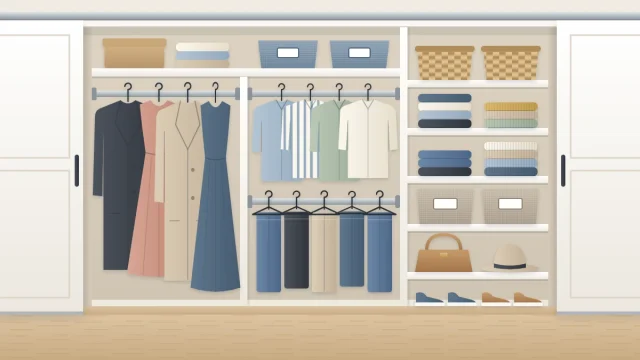
Then arrange the rod from short to long. Put the shortest garments at one end and the longest at the other, so the hems form a slope. The open space under the short end becomes one clear block you can use, instead of scattered gaps between long and short items.
Fill the space under short clothes
Measure that block: its width, its depth, and its height from the floor to the lowest hem. Then choose something that fits inside those three numbers with a little clearance.
- A small shelf unit for folded sweaters, jeans or bins.
- A low set of drawers for socks, underwear and T-shirts.
- A shoe rack, if shoes are what you most need to place. The comparison of shoe storage ideas shows which types suit a narrow space.
If the unit is a tall freestanding one, anchor it with the anti-tip hardware and method in the manufacturer’s instructions. If your closet is the common kind with a single rod and shelf behind one or two doors, the guide to reach-in closet organization shows how to divide its width into sections.
Move off-season and rarely used items out
This is the step that frees the most room. Off-season clothes, luggage, formal items worn once a year and spare bedding can live under a bed, on a high shelf elsewhere or in another closet. Pack them clean and completely dry, in containers you can identify from the outside.
Twice a year the two sets swap places. The guide to seasonal clothing storage covers how to pack and where to keep them.
Keep the floor clear and the closet lit
The floor of a small closet fills first, because dropping something there takes no effort. Once it is covered, you can no longer step close to the rod or see what is at the back, and the whole closet becomes harder to use.
Allow the floor one planned use, such as a shoe rack or the unit under your short clothes, and keep the rest empty. If things keep landing there, treat it as information: that item has no home, or its home is too hard to reach.
Light matters for the same reason: you use what you can see. If the back or the lower part of the closet is dark, a battery-powered stick-on light, used according to its instructions, makes the contents visible. Any wired lighting is a job for a qualified electrician.
Tip
Change one thing at a time and live with it for a week. In a small closet, each added organizer takes space as well as giving it, and it is easier to judge them one by one.
Frequently asked questions
How do I organize a small closet with a lot of clothes?
Start by reducing what the closet has to hold. Count your garments, measure the rod and shelves, and move off-season and rarely used items to other storage. Then use slim matching hangers, arrange garments short to long, and fill the open space under the short ones.
Are over-the-door organizers good for small closets?
They use a surface that is otherwise empty, which helps when floor and shelf space are short. They need a hinged door that still closes with the hooks in place. They also add load to the door, so follow the product instructions and stay within the limits stated for the organizer and the door hardware.
Should I fold or hang clothes in a small closet?
It depends on which you have more of: rod length or shelf and drawer space. Measure both, then count your garments. Hang what creases or slips when folded, and fold knits and casual items. If the rod is full, folding more items into a unit under short clothes relieves it.