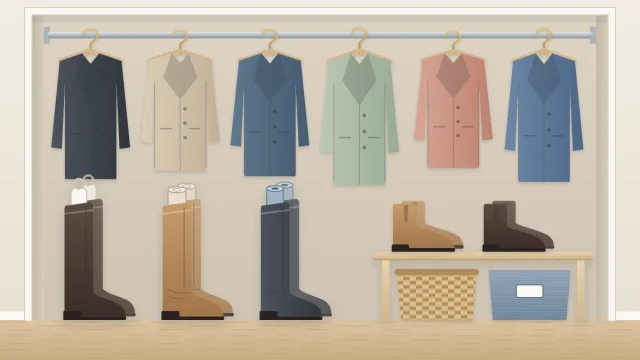
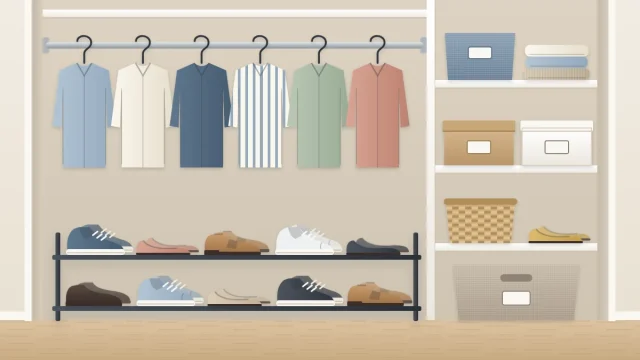
Shoe Storage Ideas: Racks, Shelves, Boxes and Door Organizers
Nine common kinds of shoe storage compared by which shoes fit, how visible the pairs are, how easy they are to put back and what space each one uses, so you can match one to your closet.
Most shoe storage ideas look good in a tidy picture and then fail at home for one plain reason: the product was chosen before the shoes were counted and the space was measured. A rack that suits twelve pairs of flats does little for six pairs of tall boots, and a door organizer is no use on a sliding door.
The options below are compared on the same four points, so you can match one to your own closet: which shoes fit, how visible the pairs are, how easy it is to put a pair back, and which space it uses up.
Measure and count before you choose
Three measurements decide almost everything. Write them down before you look at any product.
- Width of the space. Measure the floor, shelf or wall section where shoes will live, at the narrowest point.
- Depth. Measure from the back wall to the point where a closed door or hanging clothes begin. Then measure your longest shoe, heel to toe.
- Height of your tallest shoes. Ankle boots and high-top sneakers need more room between shelves than flats do.
Then count your pairs by kind: flat shoes and sandals, sneakers, heels, ankle boots, tall boots. The count tells you how many places you need, and the mix tells you which kind of storage will fit them.
The options side by side
| Option | Suits | Limits |
|---|---|---|
| Low floor rack | Everyday pairs you grab and return often | Uses floor space; open to dust; tall boots rarely fit |
| Stackable shelves | A collection that grows or changes | Fixed spacing between tiers; check the stated stacking limit |
| Angled shoe shelves | Seeing every pair at a glance | Needs more depth and height per row; often wall-fixed |
| Cubby unit | Flats, sandals and slim sneakers, one pair per opening | Bulky or tall shoes do not fit the openings |
| Clear drop-front or lidded boxes | Pairs worn occasionally that you want kept clean | Slower to put back; each box takes more room than the pair |
| Over-the-door pocket organizer | Flats, sandals and light slip-ons | Needs a hinged door; adds load to the door |
| Hanging fabric shoe shelves | A closet with spare rod width and no floor space | Takes hanging room; adds load to the rod |
| Under-bed container | Off-season pairs | Out of sight; not for shoes in daily use |
| Bench with storage near the entry | The few pairs worn most days | Holds only a handful; lives outside the closet |
Racks, shelves and cubbies
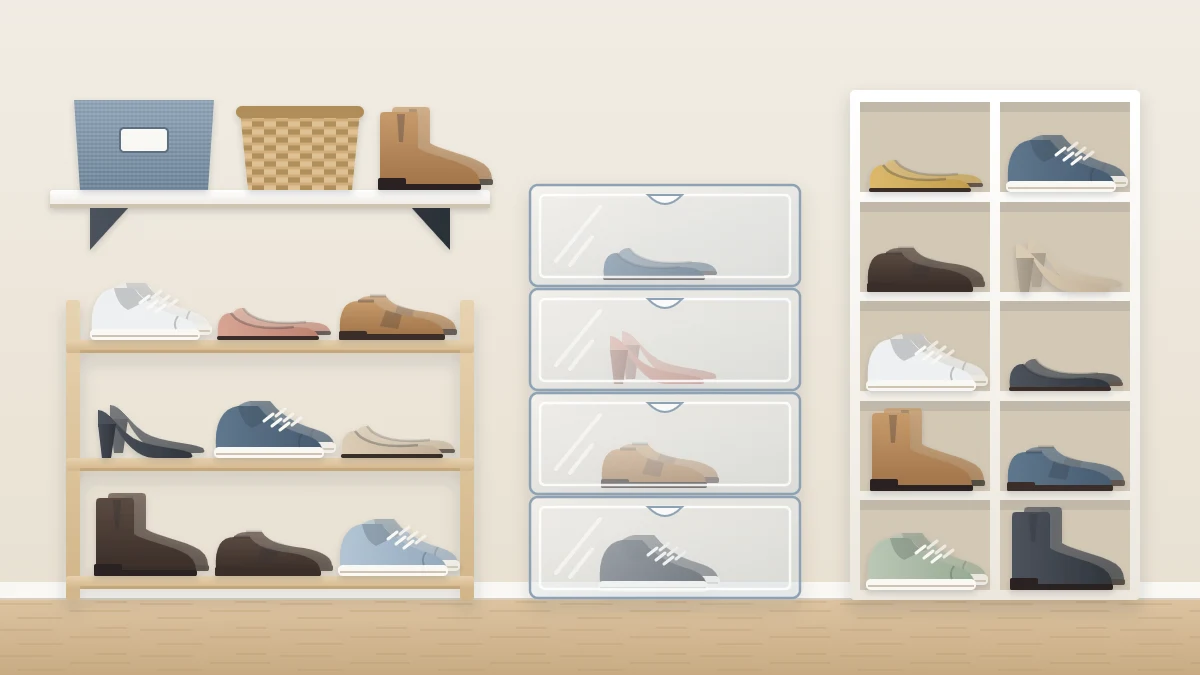
A low floor rack is the simplest option. Every pair is visible, and putting one back takes a second, which is why it suits the shoes you wear most. It uses the floor under your hanging clothes, so check the height below them.
Stackable shelves do the same job but let you add a tier later. Measure the gap between tiers against your tallest everyday shoe, and follow the product’s instructions on how many units may be stacked.
Angled shelves tilt each pair toward you, usually with a lip or rail at the front to catch the heels. They show a collection well but use more depth and height for each row than a flat shelf does.
Cubby units give each pair its own opening, which keeps pairs together and makes an empty slot obvious. The openings are a fixed size, so measure your widest and tallest pair against them before you buy.
Boxes for pairs you wear less often
Clear boxes keep dust off and stack neatly on a shelf. A drop-front box opens at the front, so you can take a pair from the middle of a stack without lifting the boxes above it. A lidded box has to be lifted down first, which makes it better for pairs you reach for a few times a year.
The trade-off is effort: opening a box is one more step than setting shoes on a rack. Use boxes for occasional pairs and keep daily pairs in the open. The guide to choosing closet storage bins covers materials, lids and sizing in more detail.
Door and rod organizers
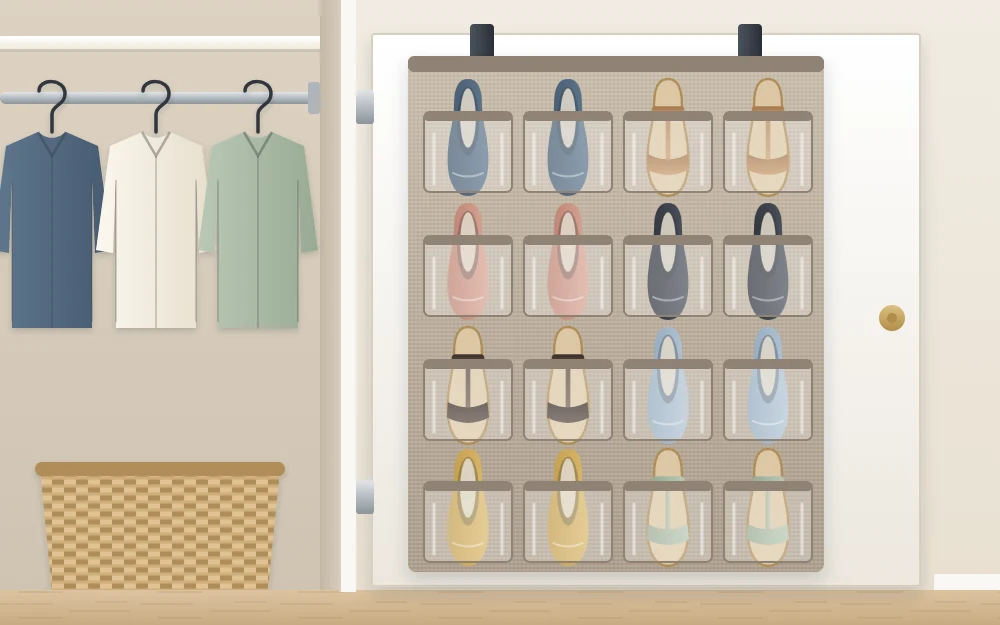
An over-the-door pocket organizer turns the inside of a hinged door into storage without using any floor or shelf. Pockets are shallow, so they suit flats, sandals and slip-ons rather than thick-soled or bulky shoes. Check that the door still closes fully with the hooks in place and the pockets filled.
Hanging fabric shoe shelves attach to the rod and hang down like a column of soft cubbies. They help in a closet with spare rod width and nowhere else to put shoes, but each one takes the room of several hangers.
Good to know
Door-hung and rod-hung organizers add load to the door or the rod. Check the limits stated for the organizer and for the door hardware or rod, and fit and fill it as the product instructions describe. Wall-fixed shoe shelves and rails are different again: the fixing hardware and method come from the product manufacturer’s specifications and depend on your wall type. Ask the manufacturer or a qualified installer when unsure.
Storage outside the closet
Not every pair has to live in the closet. A shallow under-bed container holds off-season pairs lying flat; make sure they are clean and completely dry before they go in. A bench with a shelf or compartment near the entry holds the two or three pairs worn most days.
Moving shoes out is often what makes the rest fit, especially in a tight space. The guide to small closet organization explains how to decide what stays.
Matching an option to your closet
Work from your measurements and your count, not from the product.
- Clear floor under short hanging clothes: a low rack or stackable shelves.
- Spare shelf space: boxes or a cubby unit that fits the shelf depth.
- A hinged door and many flat pairs: a pocket organizer, within its stated limits.
- No floor and no door: hanging fabric shelves, or storage outside the closet.
- Mostly tall boots: none of the standard options; they need their own height.
Two smaller options often work better than one large one: an open rack for daily pairs and a few boxes for the rest. Once the storage is chosen, the guide on how to organize shoes in a closet covers sorting the pairs and deciding which go where.
Frequently asked questions
What is the best shoe storage for a small closet?
It depends on which surface is free. If the floor under short hanging clothes is clear, a low rack works. If the closet has a hinged door, a pocket organizer uses space that is otherwise empty, within the limits stated for it. Measure first, and consider moving off-season pairs out of the closet.
Are clear shoe boxes better than an open rack?
Neither is better in general. Boxes keep dust off and stack on a shelf, but each pair takes an extra step to put away. An open rack is quicker to use and shows everything at once. Many closets work well with a rack for daily pairs and boxes for occasional ones.
Can an over-the-door organizer hold any kind of shoe?
Usually not. The pockets are shallow and suit flat, light pairs such as sandals and slip-ons. Bulky shoes may not fit or may stop the door from closing. The organizer also adds load to the door, so follow the product instructions and check the limits stated for the organizer and your door hardware.