Reach-In Closet Organization: A Layout That Uses Every Section
A standard reach-in closet wastes the space under short clothes, above the shelf and in the side returns. Divide its width into long-hang, double-hang and a shelf tower, planned around your doors.
A reach-in closet is the standard bedroom closet: shallow, a few feet wide, and used from the front without stepping inside. Most come with one long rod and one shelf above it, behind sliding or hinged doors.
That basic fit-out is why reach-in closet organization so often feels like a struggle. The closet is not necessarily too small; it is laid out as a single undivided space, and large parts of it hold nothing. Dividing it into sections, each with one job, puts those parts to work.
Where a reach-in closet wastes space
Three areas are usually underused.
- Below short garments. Shirts, jackets and folded pants take up only the upper part of the hanging height. On one long rod, the space beneath them stays empty or collects a pile.
- Above the shelf. The gap between the shelf and the ceiling is often tall, and loose stacks rarely use it well.
- The side returns. Where the closet is wider than its door opening, the ends sit behind the door frame. You can see into them only at an angle and reach them only by leaning in.
Before changing anything, measure the closet and note where these areas are. The guide on how to measure a closet lists every dimension worth writing down, including the width of the door opening and the depth of each return.
Divide the width into three sections
The most useful change is to stop treating the rod as one line. Split the width into three sections, sized by what you own.
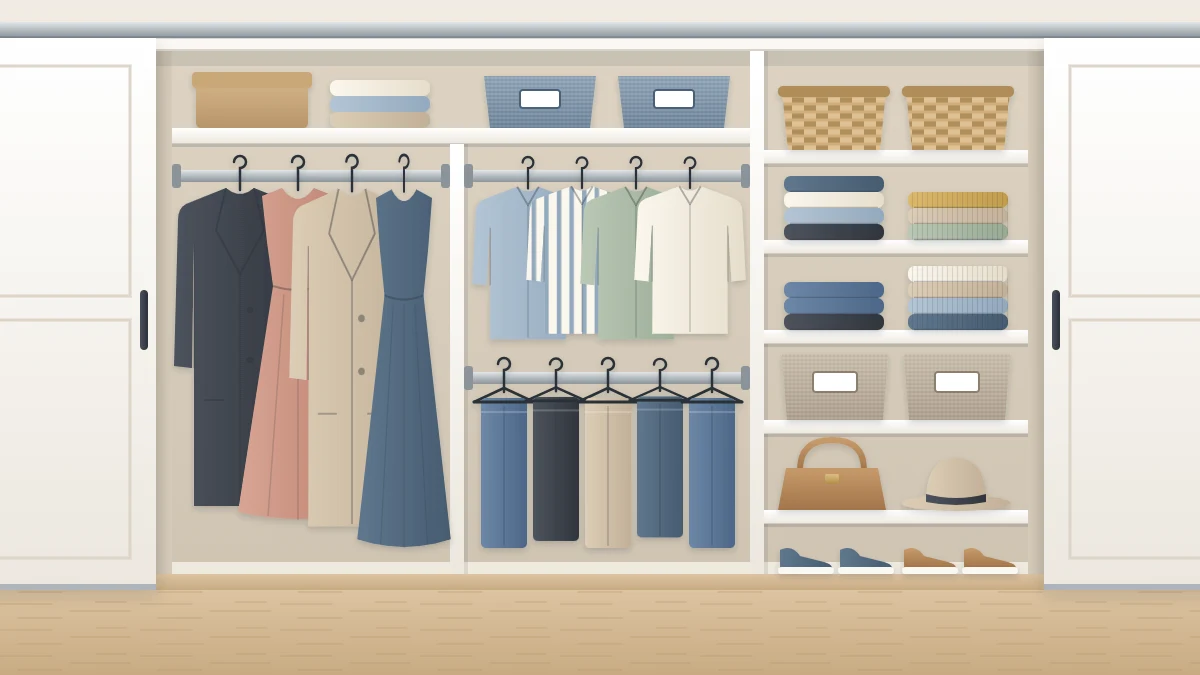
- A long-hang section. Long-hang means a single rod with clear height below it for full-length garments such as dresses, coats and robes.
- A double-hang section. Double-hang means two rods, one above the other, for short garments. It holds roughly twice as many hangers in the same width.
- A shelf or drawer tower. A column of shelves, drawers or both for folded clothes, bins and shoes.
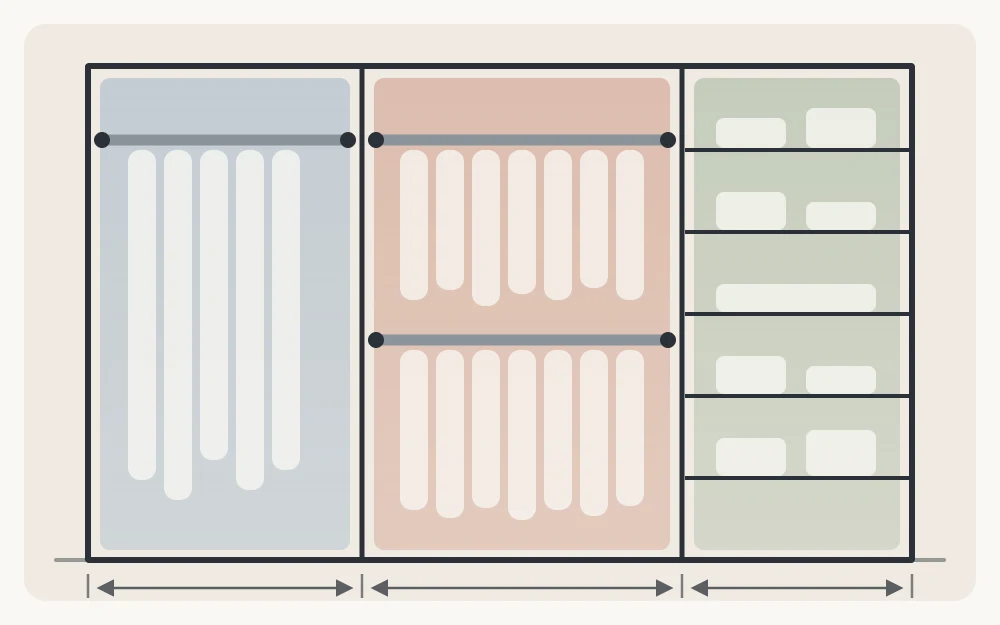
To size them, count your garments by length. Hang the long ones together and measure the rod length they occupy; that is the width of the long-hang section. Do the same for short garments and halve the figure, since they will hang on two levels. What remains is for the tower. If the numbers do not fit, the answer is fewer garments or more folding, not narrower sections.
Deciding which category lives in which section is a separate step; the guide to closet zones explains how to assign them.
Section by section
| Section | Best use |
|---|---|
| Long-hang | Full-length garments; tall boots or a low bin beneath |
| Double-hang, upper rod | Shirts, blouses and jackets |
| Double-hang, lower rod | Pants folded over hangers, skirts |
| Shelf or drawer tower | Folded sweaters, jeans, T-shirts, bins of small items |
| Upper shelf | Labeled bins of off-season and occasional items |
| Side returns | Long garments or things reached rarely |
| Floor | A low shoe rack or bins that slide out |
Put the section you use most where the door opens most freely, which is usually the center of the opening. The section used least can sit toward an end.
Side returns
A return is awkward for anything you want every day, because you cannot see into it straight on. Use it for what suits a blind corner: the long-hang section, whose garments are few and easy to identify by their length, or off-season and occasional items.
Avoid putting drawers or pull-out bins in a return. They need clear space in front to open, and the door frame is in the way.
Sliding doors and hinged doors
The door type changes the plan.
Sliding doors open only half the closet at a time. Place each category entirely within one half, so you never need both halves open for one task. Avoid putting a tower or a set of drawers at the center, where the doors overlap and neither position clears it. Nothing should stick out past the door track: deep bins, thick hangers and bulky garments at the front can catch the doors.
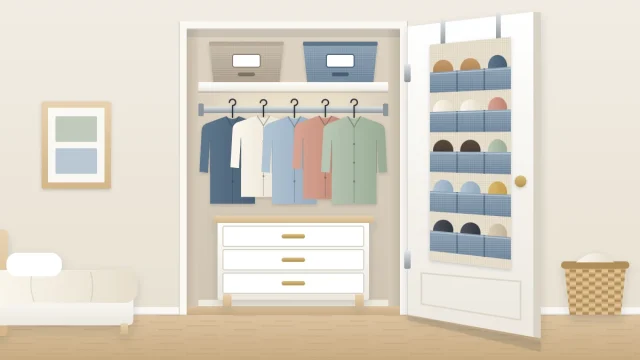
Hinged doors open the full width, and the inside of each door becomes storage for hooks or a pocket organizer. Check that the door still closes and that nothing on it presses into the clothes behind.
The floor
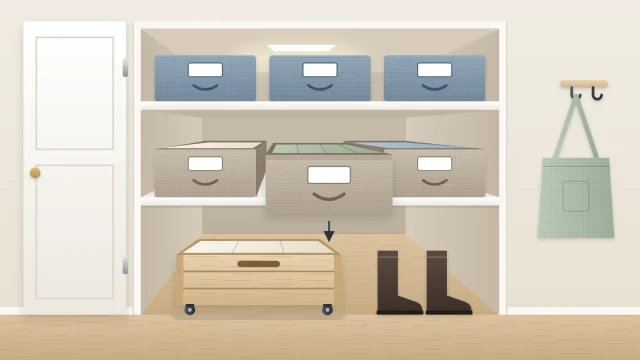
Give the floor one planned use rather than leaving it open to whatever lands there. A low shoe rack under the double-hang section works if the lower hems clear it; measure that height first. Bins or baskets that slide out like drawers suit the floor under the long-hang section, where hems leave less room.
Keep what is on the floor low and easy to pull forward. In a shallow closet, anything you have to lift other things to reach will stop being used.
Getting there without rebuilding
You do not need to tear out the existing rod and shelf to get three sections. Several additions work with what is there.
- A freestanding shelf unit set on the floor at one end becomes the tower. Measure the height under the existing rod and shelf so it fits.
- A hanging fabric shelf attaches to the rod and gives a column of soft shelves for folded items.
- An add-on lower rod hangs from the existing rod and turns part of it into double-hang.
Good to know
A hanging fabric shelf and an add-on lower rod both add to what the existing rod carries. Anything installed or hung should be fitted and loaded according to the product manufacturer’s instructions, within the limits stated for it and for the rod. A tall freestanding unit should be anchored with the anti-tip hardware and method in its manufacturer’s instructions.
If you later decide to replace the rod and shelf, the overview of closet shelves and rods explains the hardware types and what to consider before buying.
A narrow reach-in may not have room for all three sections. In that case, combine the double-hang and the tower into one end and keep a short long-hang section at the other; the guide to small closet organization covers what to move out when the width runs short.
Frequently asked questions
What is a reach-in closet?
It is a shallow closet you use from the front without stepping inside, usually a few feet wide with sliding or hinged doors. Most come with one rod and one shelf. Sizes vary a good deal, so measure the width, depth, height and door opening of your own before planning.
How do I organize a reach-in closet with sliding doors?
Plan around the fact that only half is open at a time. Keep each category entirely within one half, avoid placing drawers or a tower at the center where the doors overlap, and make sure nothing sticks out past the door track where it could catch the doors.
Can I add a second rod to a reach-in closet without tools?
An add-on lower rod that hangs from the existing rod needs no tools and creates a double-hang section for short garments. It adds to what the upper rod carries, so follow the product manufacturer's instructions and stay within the limits stated for both the add-on and the rod.