How to Organize Clothes in Drawers
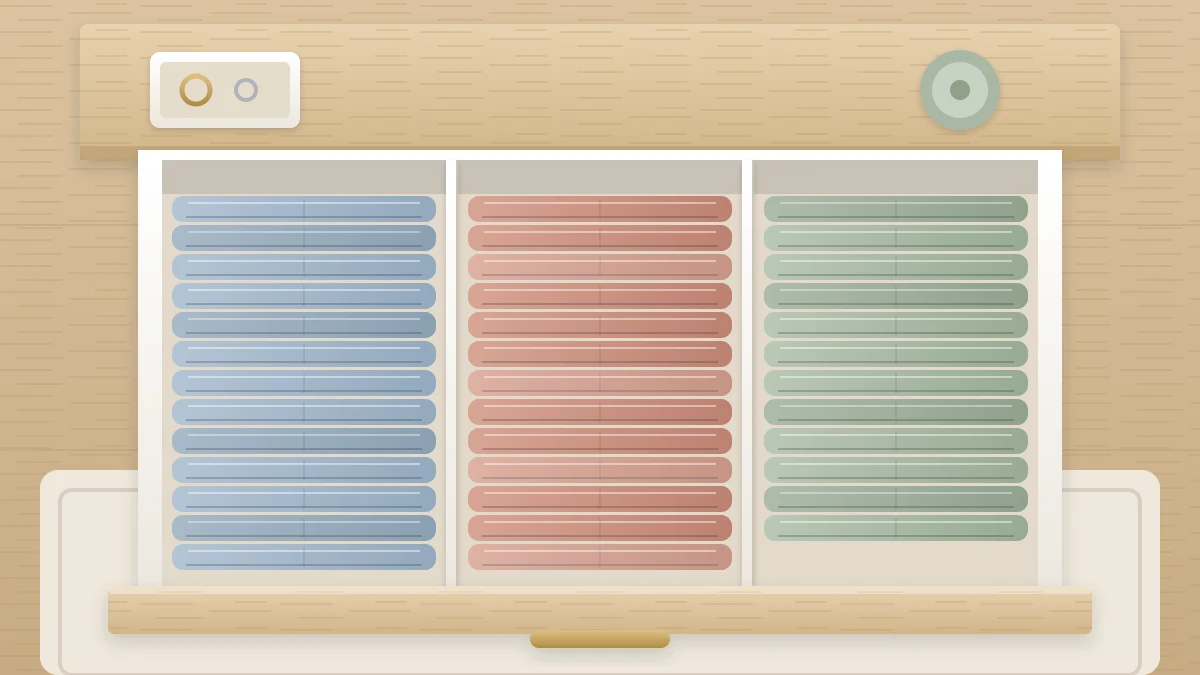
A drawer-by-drawer reset: empty, edit, give each drawer one job, then file fold clothes so they stand on edge in rows and every item can be seen from above.
At a glance
What you need
- Tape measure
- Soft cloth
- Drawer dividers or small open boxes
- A box or bag for outgoing clothes
- A cleared bed or table for sorting
A stuffed drawer hides most of what is in it. You see the top layer, forget the rest, and rummage until the whole drawer is churned. The way to organize clothes in drawers so they can be searched at a glance is to stop stacking and start standing items on edge.
This reset takes one drawer at a time. Each drawer is emptied, edited, given a single job and refilled in rows, so you can do one tonight and the next whenever you have a spare half hour.
Before you start: decide what each drawer is for
A drawer works best with one category, or two that are closely related, such as socks and underwear. Mixed drawers are the ones that turn into a jumble, because nothing in them has an edge to stay behind.
Assign drawers by how often you open them:
- Top drawers for daily items: underwear, socks, everyday T-shirts.
- Middle drawers for things used several times a week, such as exercise clothes and sleepwear.
- Bottom drawers for bulkier and less used items, such as heavy sweaters or off-season pieces.
Putting the bulkiest items in the lowest drawers also keeps the weight of the unit low.
The drawer reset, step by step
- Empty one drawer. Take everything out and lay it on the bed. Do not start a second drawer until this one is finished.
- Sort and edit. Group the contents by kind. Remove anything that belongs elsewhere, anything worn out and anything you no longer wear. If you get stuck on particular items, the guide on deciding which clothes to keep offers a few simple checks.
- Wipe the drawer out. Dust and lint collect in the corners. Use a dry or barely damp cloth and let the drawer dry completely before refilling it.
- Measure the inside. Note the inner height, width and front-to-back depth. The height tells you how tall a folded item can stand; the other two tell you how many rows fit.
- Fold to the height of the drawer. Fold each item into a compact rectangle whose short side is slightly less than the inner height of the drawer, as described below.
- Stand items on edge in rows. Place each folded item upright, folded edge up, in rows running front to back. Every item is now visible from above.
- Add dividers. Put a drawer divider or a small open box between rows so they stay upright as the drawer empties through the week.
- Close the drawer and check. It should shut without your pressing the contents down. If it does not, take something out.
How file folding works
File folding means folding a garment into a small rectangle that stands on its edge, so items sit side by side like files in a box instead of on top of one another. Nothing is buried, and taking one item out does not disturb the rest.
For a T-shirt:
- Lay it flat, face down, and smooth it.
- Fold each side in toward the center, sleeves included, to make a long narrow rectangle.
- Fold the rectangle in half, bottom to top, then in half or in thirds again until its height matches the drawer.
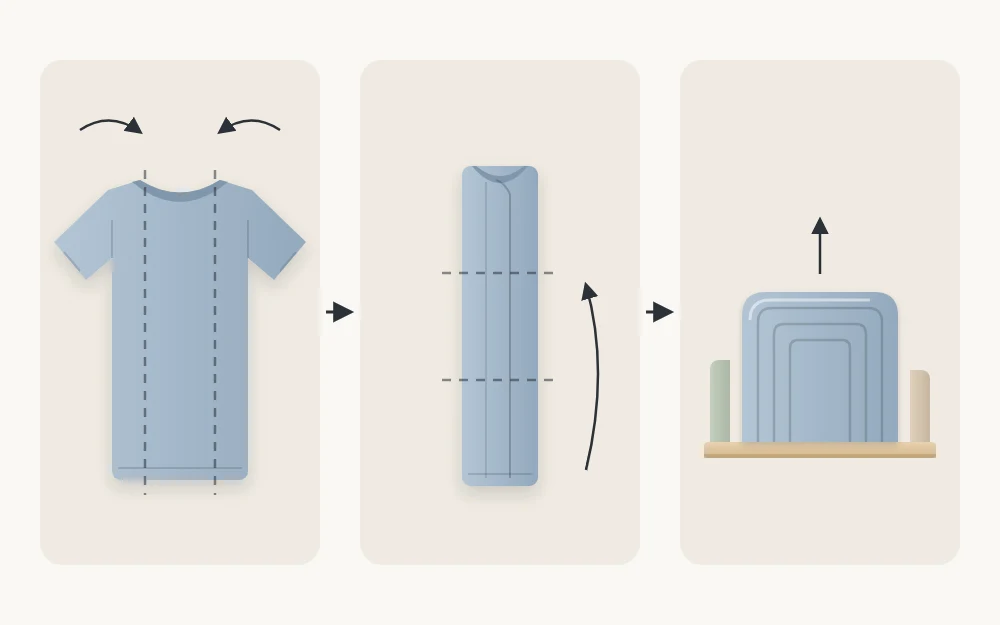
A well-folded packet stands up unsupported. If it flops, it needs one more fold or a slightly narrower first fold. The same idea works for pants, sweaters and sleepwear; thicker fabrics simply need fewer folds. Bulky sweaters may be easier laid flat in a deep bottom drawer, two or three high, and that is a reasonable exception.
Keep the rows upright
Filed rows hold each other up while the drawer is full. By midweek, with half the items in the laundry, a loose row leans and slides. Something has to take the place of the missing items.
- Drawer dividers. Adjustable ones press against the front and back of the drawer and split it into lanes. Measure the inner depth first so you choose a size that fits.
- Small open boxes. Shallow boxes without lids, including sturdy ones you already have, turn one drawer into several compartments.
When a row gets short, slide the remaining items forward and let the divider or the back of the box hold them.
Small items in their own compartments
Socks and underwear are too small to file in long rows and too many to leave loose. Give each kind its own compartment, using small boxes or a divider insert with cells. Keep socks in pairs, folded or rolled together, and stand them upright so you can count the pairs.
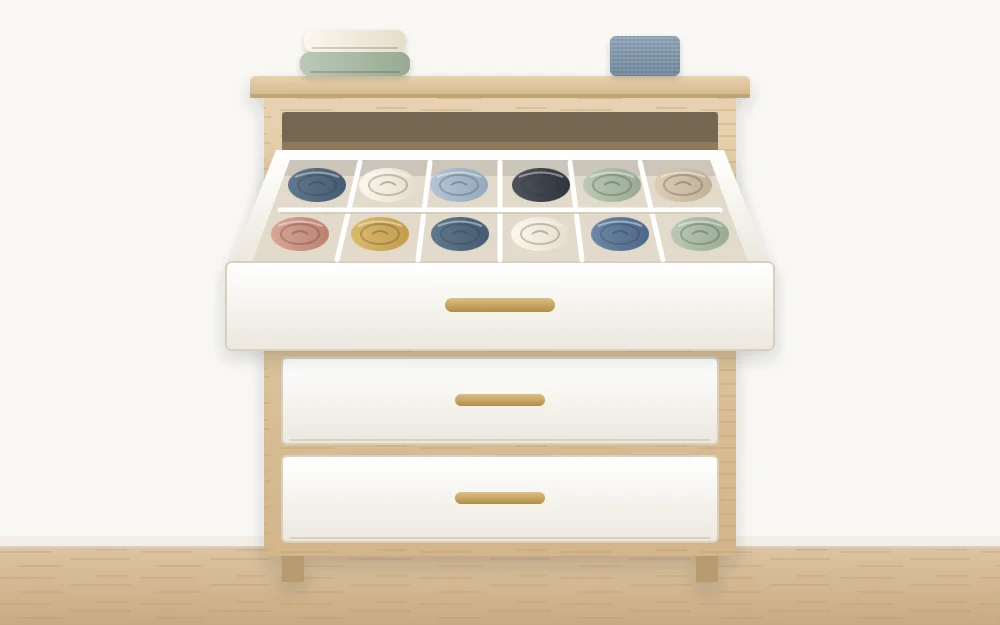
The same approach suits belts, scarves and other accessories kept in a drawer. The guide to accessory drawer dividers covers the layouts for those.
Do not overfill
An overfilled drawer undoes the whole system. Items are crushed, rows cannot be seen, and clothes catch in the gap as the drawer closes. Leave a little slack in each row, enough to slide a hand in.
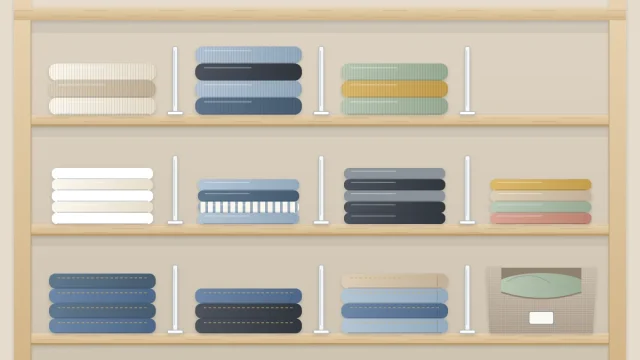
If a category will not fit its drawer with that slack, either reduce the category or move part of it. Sturdy folded items can go on a closet shelf instead, set up as described in the guide to organizing folded clothes on shelves.
Anchor the dresser
A dresser or freestanding drawer unit can tip over if several drawers are opened together or if a child climbs on it. Anchor the furniture to the wall with the anti-tip hardware and method given in the manufacturer’s instructions, and open one drawer at a time while you work.
Good to know
The right anti-tip hardware and fixing method depend on the piece of furniture and on your wall, so follow the manufacturer’s instructions for both. For general guidance, see the U.S. Consumer Product Safety Commission’s Anchor It campaign. If you are unsure, ask the manufacturer or a qualified installer.
With the furniture secured and each drawer given one job, the upkeep is small: when laundry comes back, fold to the same size and stand each item at the back of its row.
Frequently asked questions
What is the best way to fold clothes for drawers?
File folding suits most drawers. Fold each item into a compact rectangle a little shorter than the inside height of the drawer, then stand it on edge in a row running front to back. Every item shows from above, and removing one leaves the others in place.
Which clothes should go in which drawer?
Assign drawers by how often you open them. Daily items such as underwear, socks and everyday T-shirts go in the top drawers, exercise clothes and sleepwear in the middle, and bulkier or less used items such as heavy sweaters in the bottom. Keep each drawer to one or two related categories.
How full should a drawer be?
A drawer should close without your pressing the contents down, and each row should have enough slack to slide a hand in. If a category will not fit with that slack, reduce it or move part of it to a shelf instead of packing the drawer tighter.