How to Organize a Deep Closet
In a deep closet, things disappear at the back. Organize it in front-to-back lanes, use bins and rolling containers that slide out like drawers, and keep the back row for off-season items.
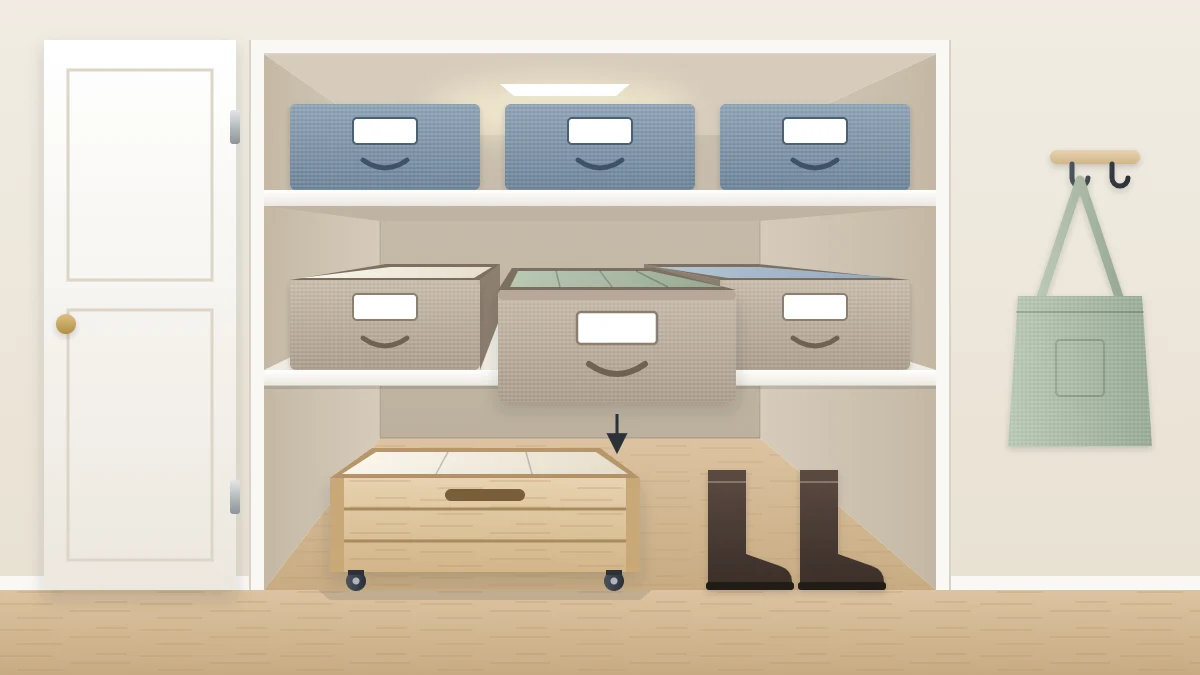
Depth sounds like a gift, and then you live with it. In a deep closet, whatever is behind is hidden by whatever is in front, and reaching it means moving things out of the way first. After a while the back becomes a place where items go and are not seen again.
To organize a deep closet, stop thinking of it as a wide surface and start thinking of it as a set of lanes that run from front to back. Either the back comes to you, in a container that slides out, or the back holds only things you rarely need.
Four principles for deep storage
- Store in front-to-back lanes of one category. When everything in a lane is the same kind of thing, pulling out the front item reveals more of the same, not a surprise.
- Use containers that work like drawers. Bins with handles, pull-out baskets and rolling crates bring the back of the space forward in one movement.
- Front row for daily items, back row for the rest. If a lane has to hold two things, the one behind should be off-season or rarely used.
- Never stack loose items two rows deep. A loose back row cannot be reached without unpacking the front row, so in practice it is lost.
Before applying them, measure the depth of each shelf, the hanging space and the floor, front to back. Those figures decide which containers fit. If your closet is shallow, with a single rod and shelf, the guide to reach-in closet organization is the better starting point.
Deep shelves: one long bin per category
A deep shelf holding loose stacks always ends up with a visible front row and a forgotten back row. Replace the two rows with long bins that run the full depth of the shelf, one category in each. To get anything, you slide the whole bin forward, and the back of the shelf arrives with it.
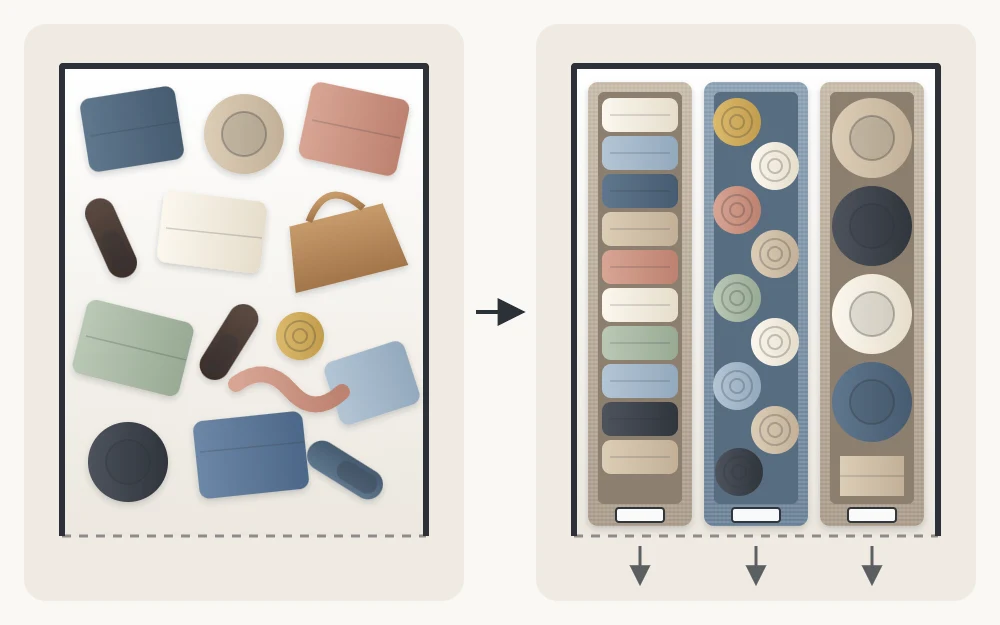
Measure the shelf depth and choose bins a little shorter than that figure, so they sit fully on the shelf. Measure the width as well and work out how many bins fit side by side with room for your fingers between them. A handle or a cut-out grip on the front makes a bin much easier to pull.
Inside each bin, put the items you use most at the front. The guide to closet storage bins compares materials, lids and sizes.
Label the front
A long bin shows only its short end, so its contents are invisible from where you stand. Label the front of every bin with the category inside. The guide on how to label closet storage covers label types and wording that stays accurate.
Tip
A full bin from a high shelf is awkward to lift down. Keep long bins on shelves between knee and shoulder height where you can, and use a stable step stool, as its instructions describe, for anything higher.
Deep hanging space
Garments on a rod use only part of a deep closet’s depth, usually a little more than the width of a hanger. Measure a hanger with a jacket on it, then measure the closet’s depth, and you will know how much lies unused behind the clothes.
There are two honest uses for it.
A second rod behind the first. This is workable only for off-season clothes. Reaching the back rod means pushing through or removing the front row, which is acceptable twice a year and tiresome every morning. If you add a rod, the fixing hardware, the method and the load limit come from the product manufacturer’s instructions; ask the manufacturer or a qualified installer when unsure.
The back wall, with a clear path to it. Leave a gap in the hanging clothes, or keep the front rod short, so you can step or reach through. Then the back wall can take hooks or shallow shelves for items you want in view.
The deep floor
Floor space that runs far back invites boxes pushed in until they stop. Use the same lane principle here, with wheels.
- Rolling bins or crates. A low container on casters rolls out from under hanging clothes and back in again. One category per container.
- A rolling cart. In a closet tall enough below the hems, a narrow cart with two or three tiers holds folded items or shoes and comes out as a unit.
- Bins with handles. On carpet, where casters roll poorly, a bin you can drag by a handle does the same job.
Measure the height from the floor to the lowest hems before choosing, and leave the floor in front of the containers clear so they have somewhere to roll.
Corners and side walls
A deep closet has more side wall than a shallow one, and it is usually bare. Hooks on the side walls suit items that hang flat against the wall: bags, robes, belts or tomorrow’s clothes. Keep them clear of the path the bins and hangers travel.
Corners are hard to reach into, so give them things that stand on their own and are rarely moved, such as a tall bin of off-season items.
Good to know
Fit hooks, rails and shelves as the product instructions describe, using the hardware and method the manufacturer specifies for your wall type, and use each one only for what it is designed to carry.
Light the back
Light matters more in a deep closet than in a shallow one, because the room light rarely reaches the back. If you cannot see into the far end of a shelf or behind the clothes, battery-powered lights, placed and used according to their instructions, make those areas usable. Any wired lighting is a job for a qualified electrician.
Review the back row each season
Even a well-planned back row drifts toward being forgotten. At each change of season, when off-season clothes move forward and the others move back, pull out every bin and container from the back and look inside.
Ask of each item whether you used it in the season that just ended. What you did not use and do not expect to use can go in the donate box. Check that labels still match contents.
Frequently asked questions
How do I use the back of a deep closet shelf?
Use one long bin per category that runs the full depth of the shelf, and slide the whole bin forward when you need something. Put the items you use most at the front of the bin and label its front, since only the short end is visible.
Should I put a second rod at the back of a deep closet?
Only for off-season clothes. Reaching a back rod means pushing through the front row, which is fine twice a year and impractical daily. If you add one, the fixing hardware, method and load limit come from the product manufacturer's instructions for your wall type.
What is the best storage for a deep closet floor?
Containers that come to you: low rolling bins or crates, a narrow rolling cart, or bins with handles on carpet. Keep one category in each, measure the height under your hanging clothes before choosing, and leave the floor in front clear so the containers can roll out.