How to Organize Hanging Clothes in a Closet
How to put a jumbled closet rod in order: group by category, add one second sort, face everything the same way, arrange short to long, leave slack and mark where the categories change.
A closet rod turns into a jumble gradually: a shirt goes back wherever there is a gap, a dress hides between two jackets, and soon finding one thing means pushing through everything. To organize hanging clothes so they stay easy to see and reach, you need a clear order along the rod and enough slack for hangers to slide.
The steps here assume you have already decided which garments belong on hangers. If you have not, the guide on what to hang and what to fold comes first, since a rod crowded with things that could be folded is hard to arrange at all.
Group by category first
Take a look along the rod and name the kinds of garment on it: shirts, pants, skirts, dresses, jackets, coats. Each kind is a category, and each category should occupy one unbroken stretch of rod.
Slide the hangers along until every category is together. This alone makes the biggest difference, because you now look in one place for any given garment. It also shows you how much rod each category takes, which is useful when one of them turns out to be far larger than you thought.
Add a second sort that helps you find things
Inside each category, a second key makes single items quicker to spot. Choose the one that matches how you search:
- Sleeve length. Sleeveless, short sleeves, long sleeves. Useful when you choose by the weather.
- Weight. Light fabrics, then heavier ones. Useful for jackets and for shirts that span the seasons.
- Color. Light to dark, or grouped by color family. Useful if color is the first thing you look for.
One second key is plenty. Stacking several on top of each other creates an order that is tiring to keep up, and an order that is not kept up is no order at all.
Same direction, same kind of hanger
Hang every garment facing the same way, with all the hooks pointing the same way over the rod. You then see each garment from the same side and can flick through them like pages.
Use one kind of hanger for each category, and ideally for the whole rod. Hangers of different shapes hold garments at different heights and catch on one another, which is why a mixed rod looks ragged and moves badly. With matching hangers the shoulders line up at one height and everything slides. Which type suits which garment is covered in the guide to choosing closet hangers.
Arrange by length, short to long
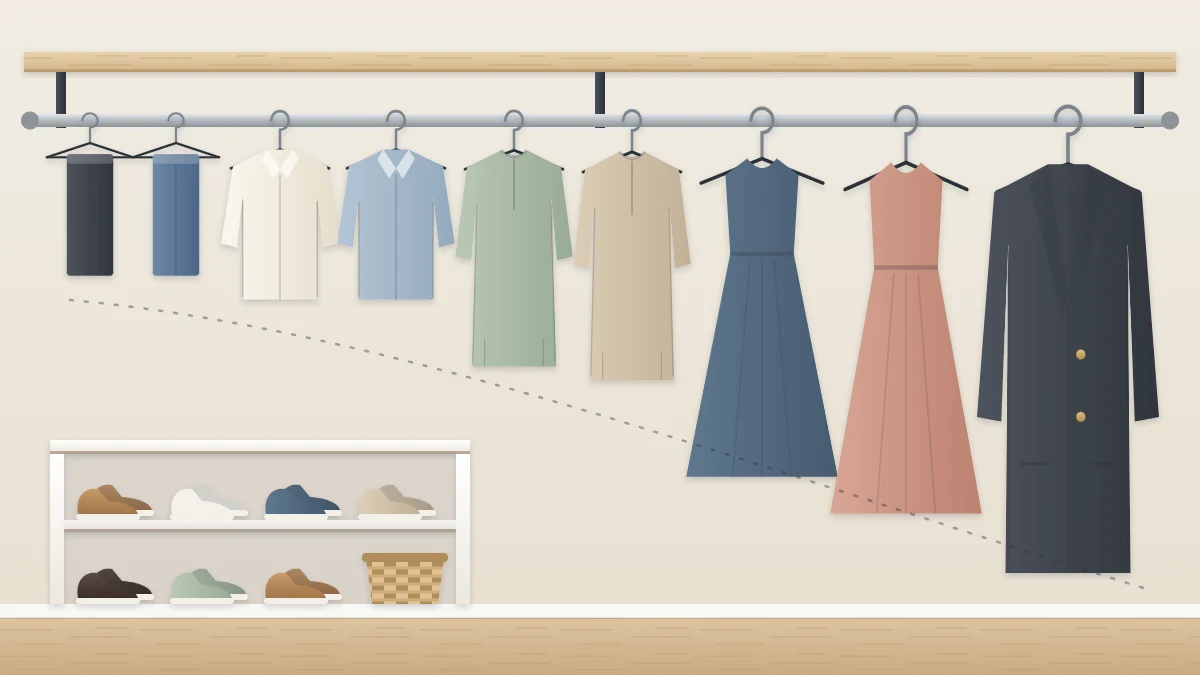
Within the limits of your categories, order the rod so garments run from the shortest to the longest. Pants folded over a bar and short shirts go at one end, longer tops next, then dresses and coats at the other end.
The reason is the space underneath. When short garments are scattered between long ones, the area below them is broken into useless gaps. Gathered together, the short garments leave one clear block of space under them, which can take a low shelf unit, a shoe rack or a couple of bins.
Measure that block before putting anything in it: from the hem of the longest garment in the short group down to the floor, and the width of rod the group covers.
Give long garments a clear drop
The section of rod kept for full-length garments is called long-hang. Dresses, long coats and long skirts need a clear drop beneath them all the way to their hems.
If hems rest on the floor, on a shoe rack or on the lid of a bin, they crumple and collect dust. Check by looking at the longest garment you own: there should be a visible gap below it. If there is not, move whatever is underneath, or shift the long garments to a part of the rod with nothing below.
Leave some slack
A rod packed tight works against you in two ways. Garments pressed together crease each other, and putting a hanger back means forcing a gap with one hand while aiming with the other. That small struggle is exactly what sends clean clothes to the chair instead.
A simple test: push the hangers in one category to the side. If they slide freely and leave a hand’s width or more of bare rod, the category has slack. If they will not move, the category needs editing, or part of it needs another home, such as a shelf or an off-season bin.
Tip
Count your hangers per category once the rod has slack, and treat that count as the limit. When a new garment arrives and there is no free hanger, something else leaves the rod.
Mark where categories change
Once the order is set, make the borders visible so it survives laundry day. Two easy ways:
- Rod dividers. Small discs or tags that slip over the rod between categories. Blank ones work; you can add a label if several people use the closet.
- A contrasting hanger. One hanger in a different color at the start of each category does the same job with nothing extra to buy.
Double-hang as a layout idea
Double-hang means two rods one above the other, an upper and a lower, each holding short garments. Since shirts, jackets and folded pants use only part of the closet’s height, two rows can fit where one row hung before.
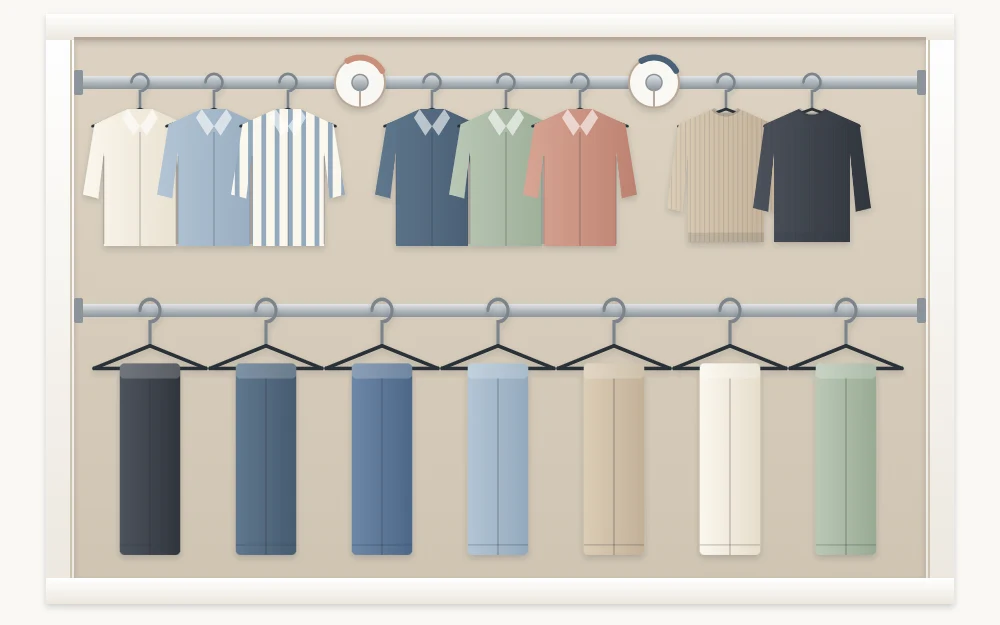
Whether it works depends on your closet and your clothes. Measure your longest short garment on its hanger, then the height available, and remember that the upper rod must still be within your reach. Keep one section of single rod for long-hang.
Good to know
Any added rod, whether it hangs from the existing one or fixes to the closet walls, must suit your closet and be installed and loaded according to the product manufacturer’s instructions. If you are unsure, ask the manufacturer or a qualified installer.
For a fuller look at the fixed parts of the closet and how they can be arranged, see the guide to closet shelves and rods.
Frequently asked questions
What is the best order for hanging clothes on a rod?
Group by category first, so all shirts, all pants and all dresses sit together. Inside each category add one second sort that suits how you search, such as sleeve length, weight or color. Then arrange the categories from short garments to long so the space beneath the short ones is usable.
How much space should there be between hangers?
There is no fixed figure, since garments and hangers vary. A practical test is to push one category to the side: the hangers should slide freely and leave at least a hand's width of bare rod. If they will not move, the category needs editing or another home.
Should clothes on a rod be organized by color?
Only if it helps you find things. Color is one of several possible second sorts within a category, along with sleeve length and weight. Category comes first in every case. If you do not search by color, skip it and choose the key that matches how you look for a garment.